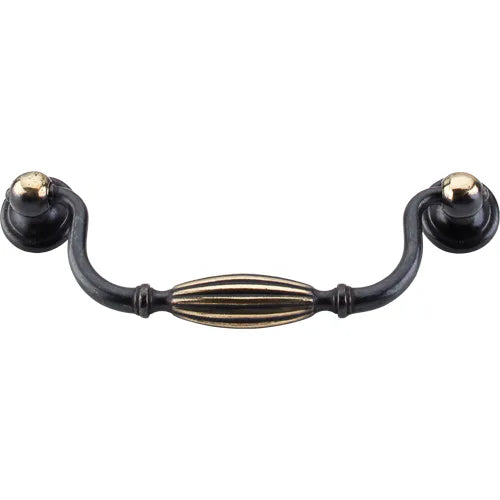
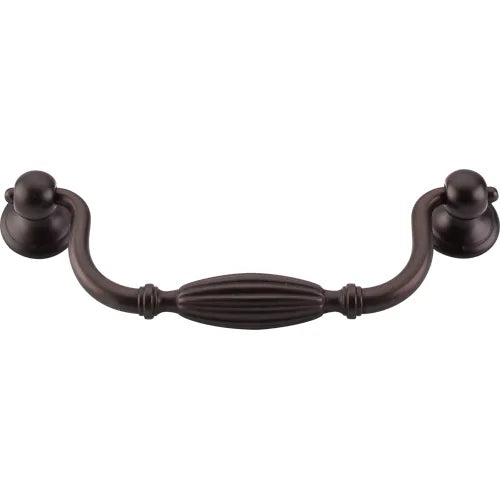
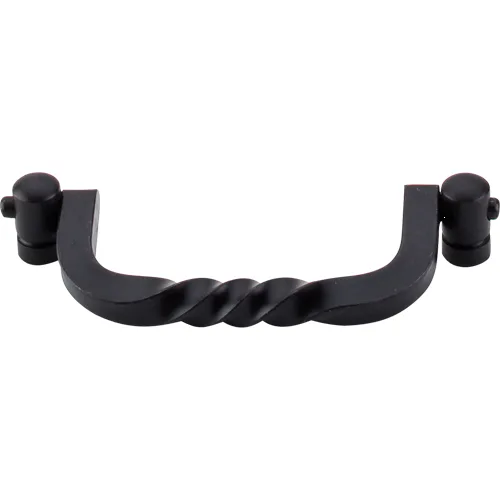
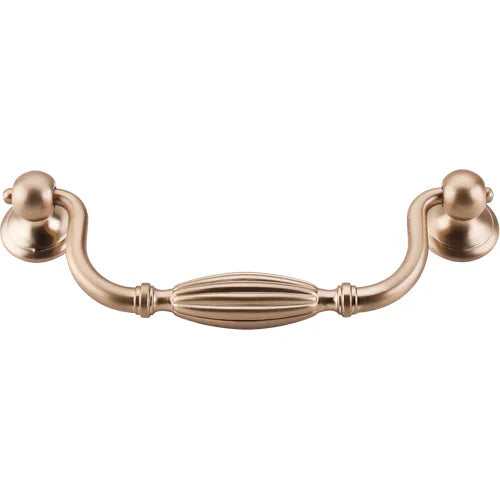
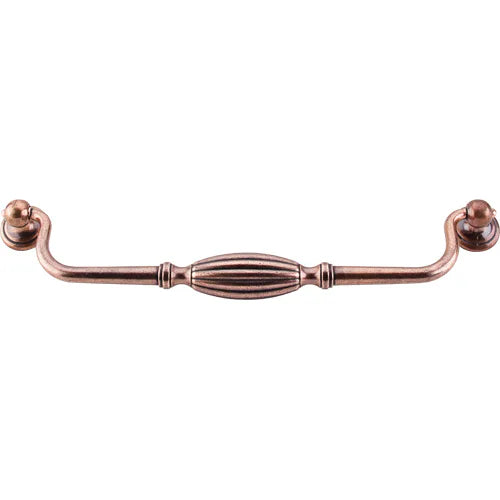
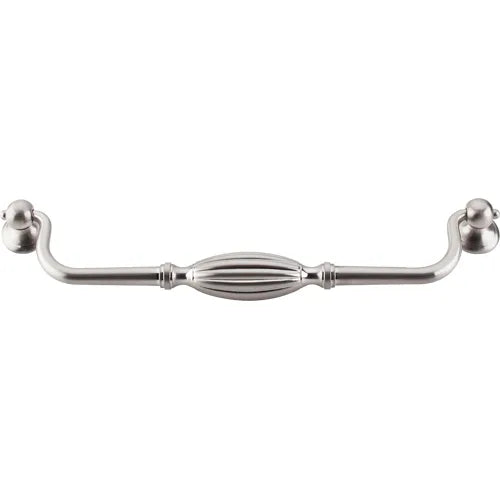
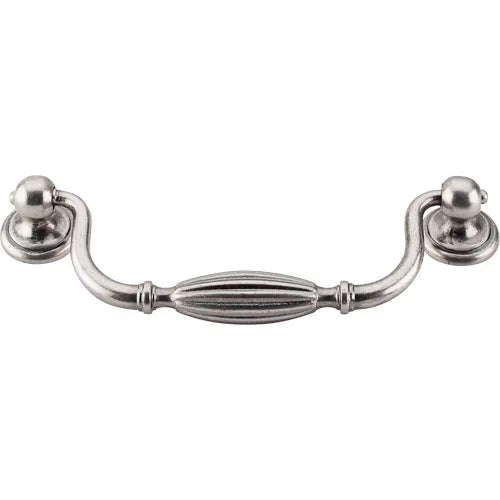
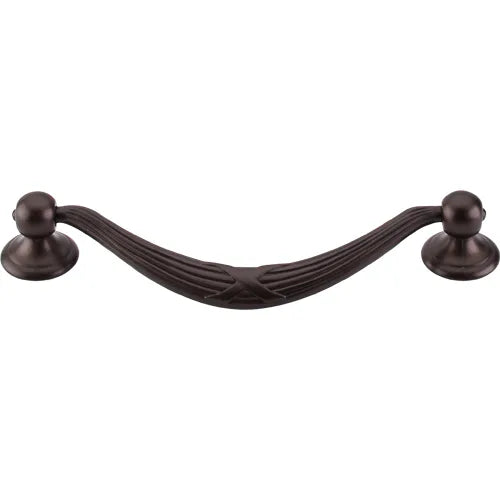
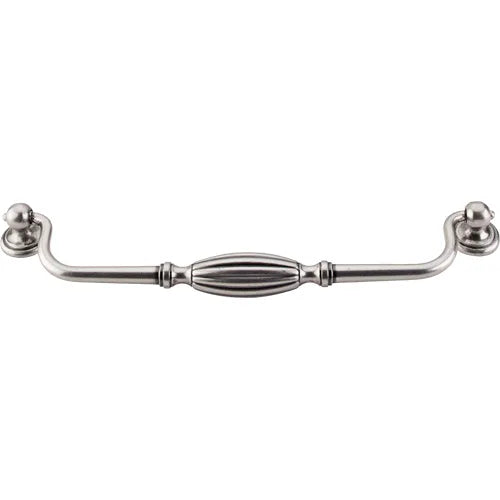
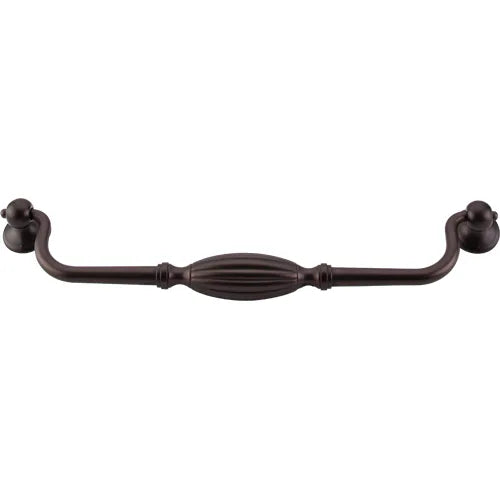
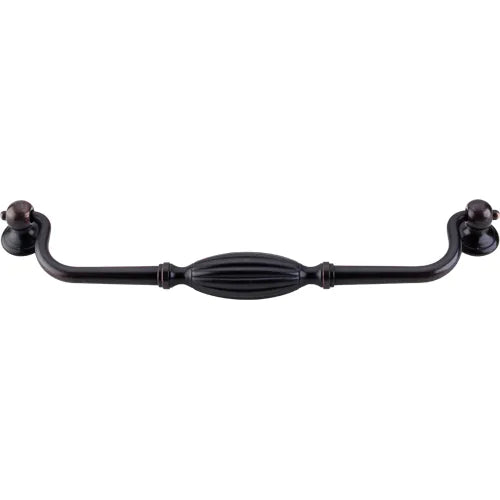
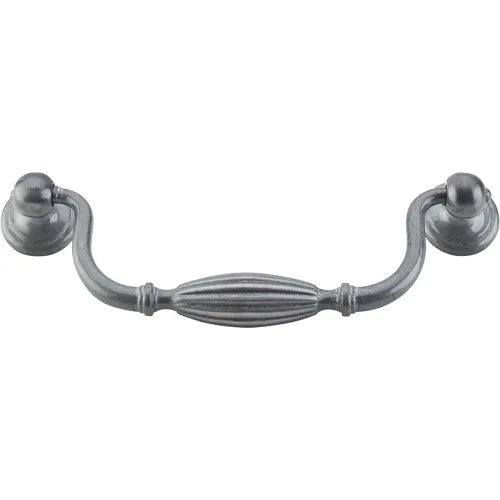
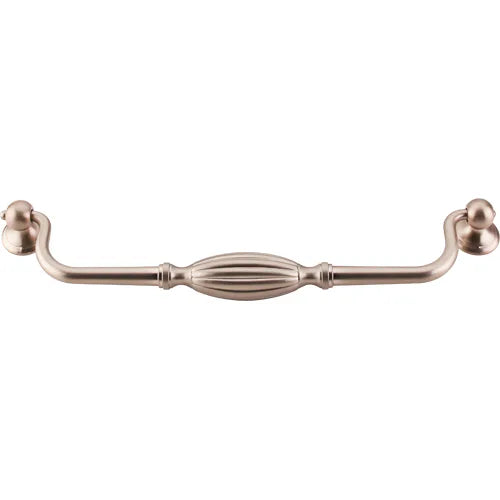
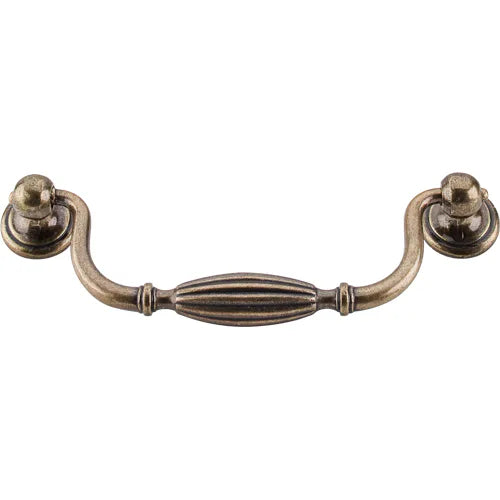
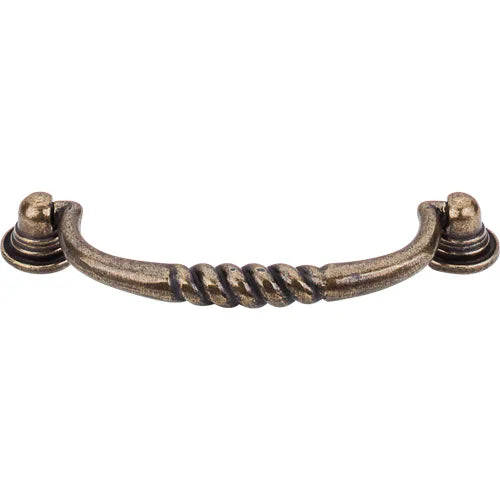
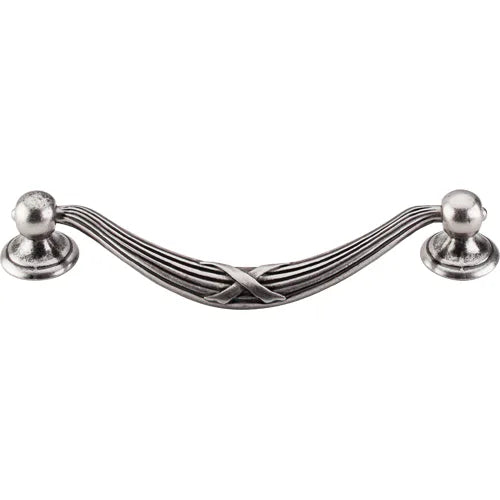
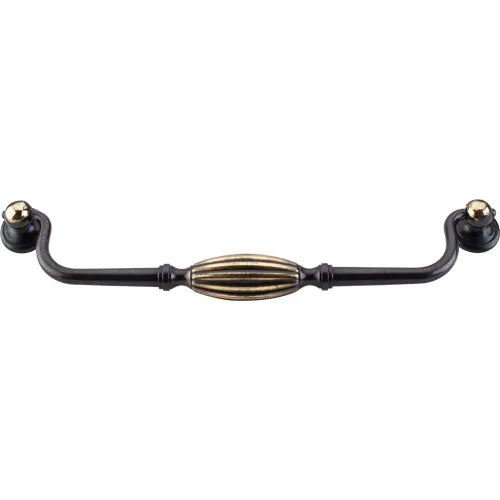
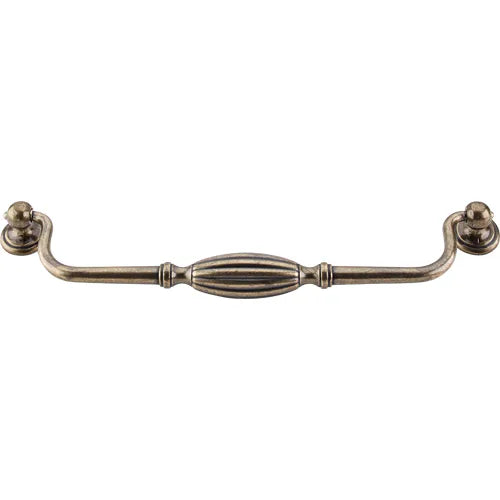
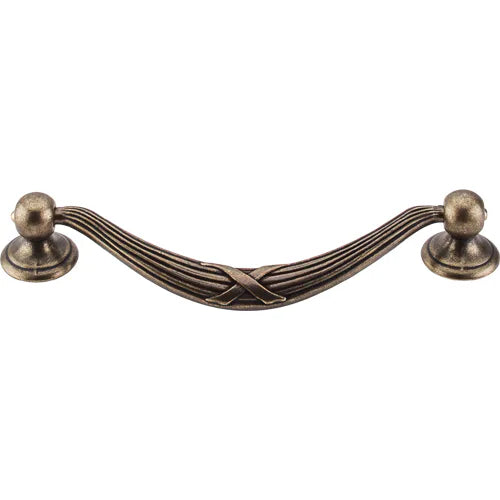
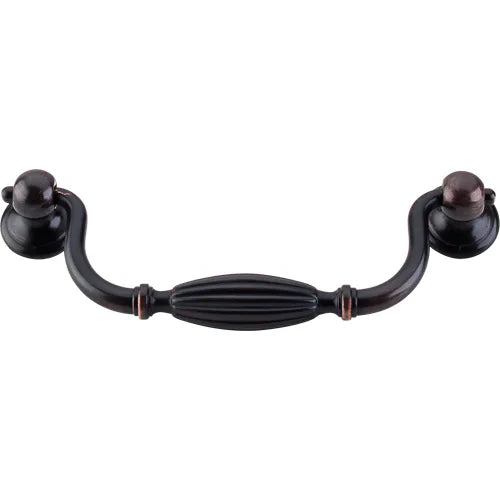
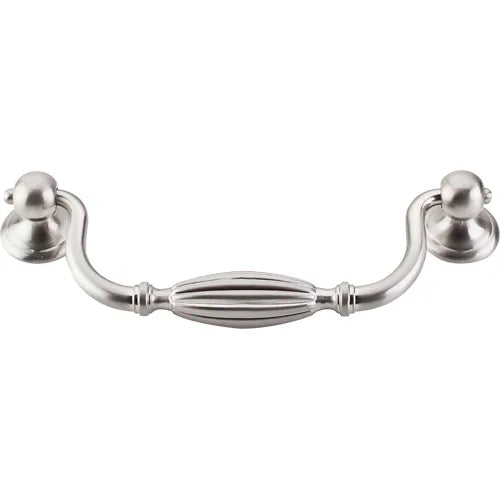
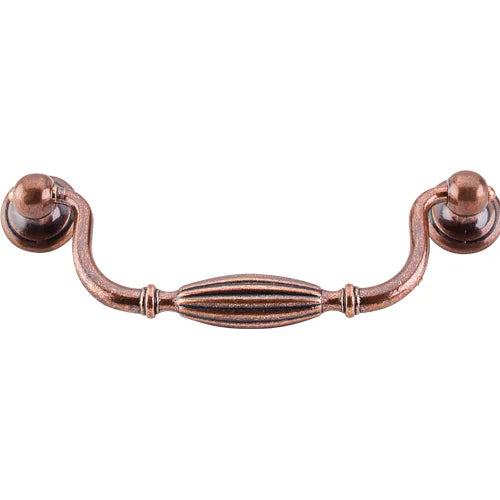
The bail pull is the heritage drawer pull at its most recognizable. A swinging U-shaped handle that drops from a single backplate, making a little vertical gesture every time you open a drawer. The pull that's been on furniture and casework for three centuries and still belongs.
What bail pulls do
The mechanical drop — handle hanging from a single mount point — is the design. When you open a drawer, the bail swings; when the drawer's closed, the bail hangs flat against the front. That kinetic quality is what gives bail pulls their character. They don't sit static the way a bar pull does; they participate in the drawer's motion.
That mechanical heritage makes bail pulls inseparable from traditional and period-correct kitchens. They read as antique furniture hardware translated to kitchen scale.
Where bail pulls belong
Traditional and refined-traditional kitchens with painted shaker or stained wood cabinetry. Federal, Georgian Revival, and Colonial Revival homes. Refined country kitchens that quote period furniture. Butler's pantries and home offices designed to feel like converted drawing rooms.
Bail pulls struggle in modern, contemporary, and minimal kitchens — the swinging mechanical detail reads as period costume against minimal surfaces. For modern drawer pulls, see bar pulls; for traditional without the mechanical detail, see cup pulls.
Bail pull finishes
Heritage silhouettes carry warm hand-finished finishes. Oil Rubbed Bronze is the period-correct default. German Bronze brings refined warm depth. Honey Bronze reads transitional-warm.
Order samples. The swinging mechanical detail in bail pulls reads correctly only with substantial weight; in-hand evaluation matters more than for static pulls.