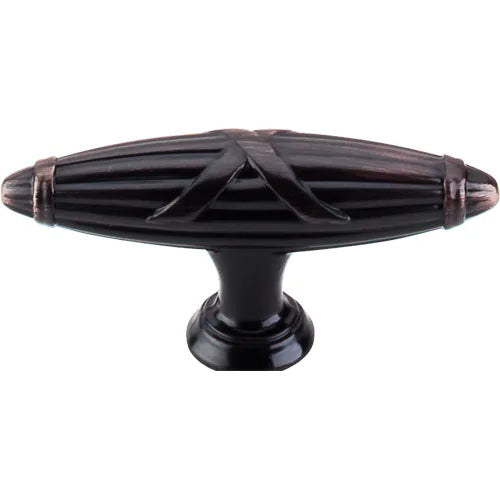
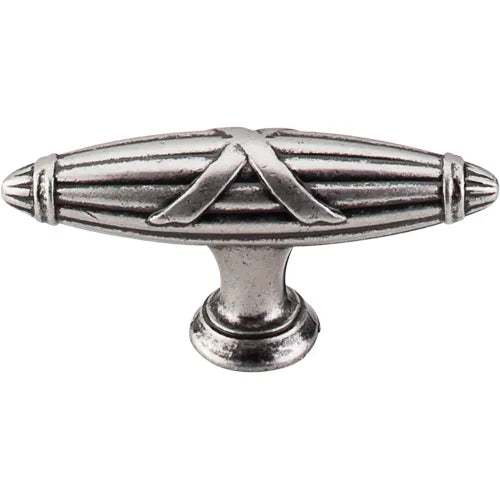
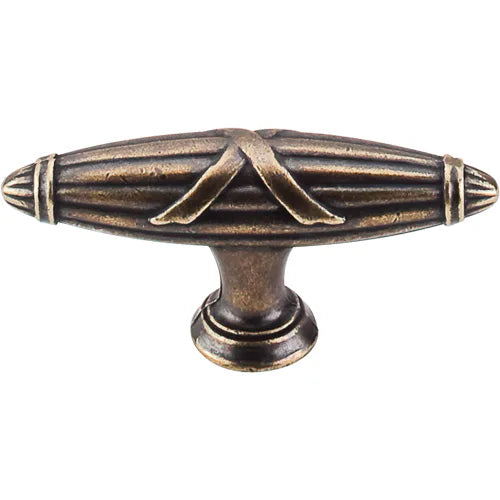
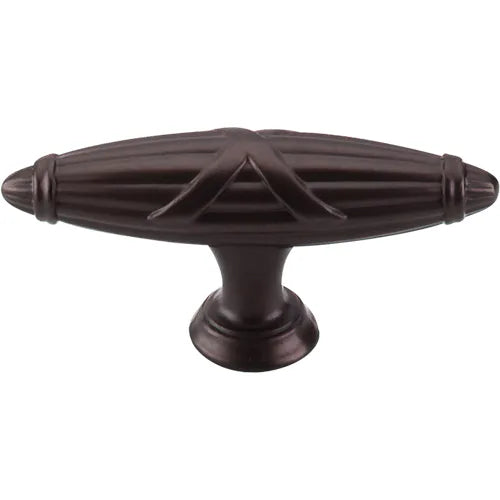
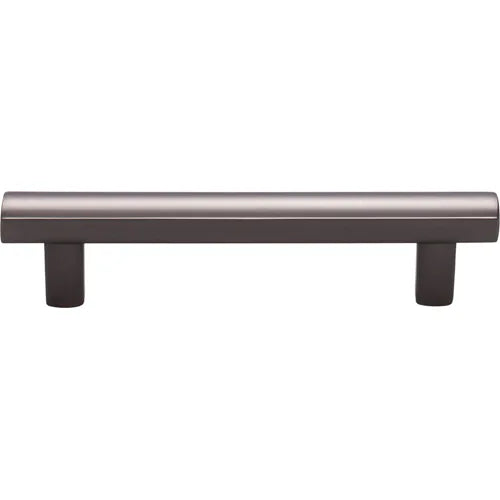
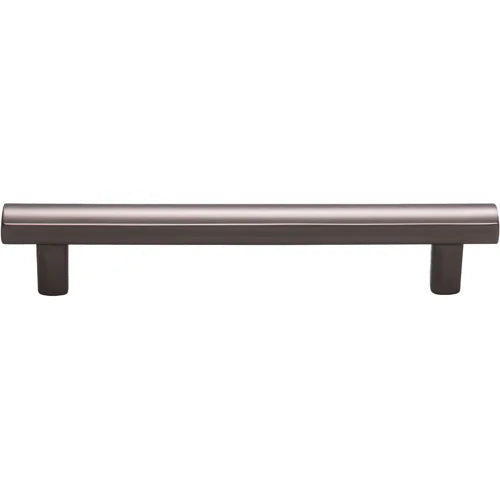
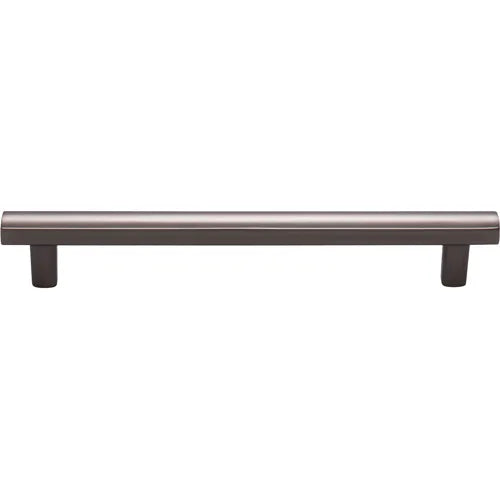
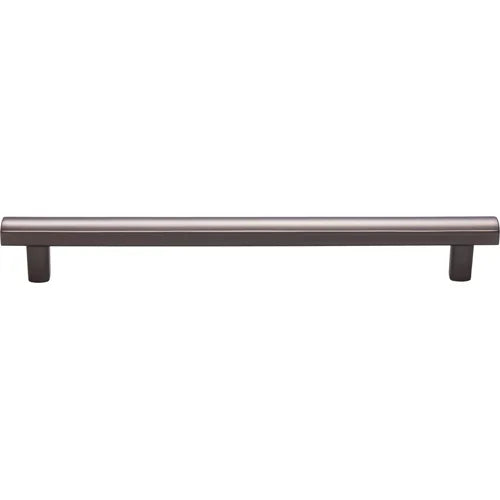
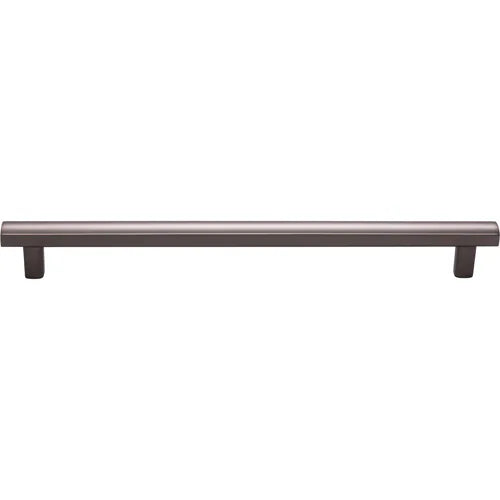
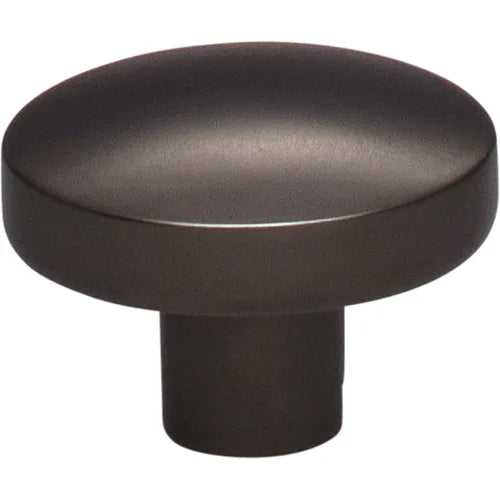
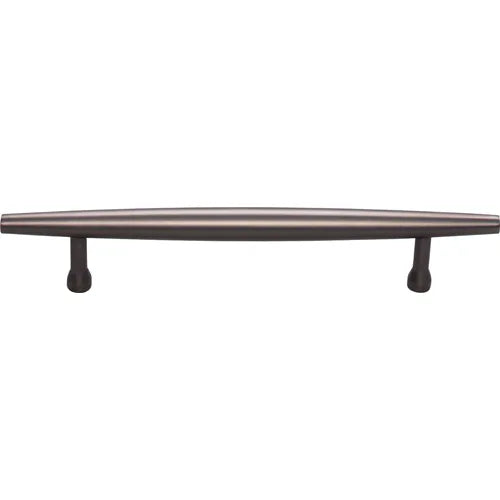
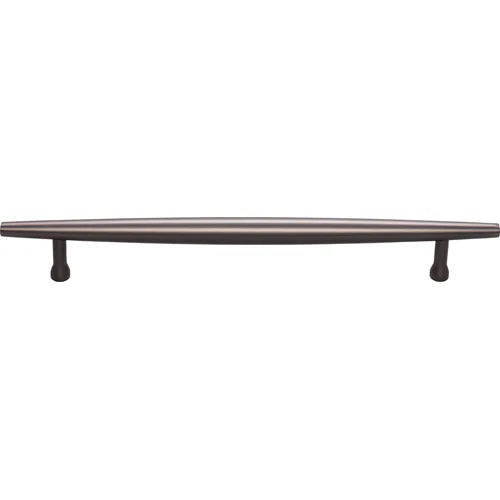
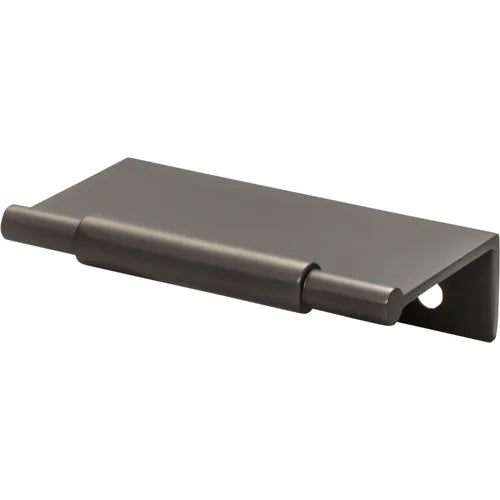
The T-pull takes the design language of the T-knob and stretches it into the pull category. A clean horizontal cap on a slim vertical stem — architectural geometry rendered at hand-scale.
What makes a T-pull different from a bar pull
A bar pull is a horizontal line; a T-pull is a horizontal line with a deliberate vertical accent. The result reads as more sculptural — there's an extra design decision visible in the silhouette. For contemporary kitchens that want hardware to add architectural detail rather than just rhythm, T-pulls are the more considered choice.
The T-pull silhouette also handles smaller scales better than bar pulls. On narrow drawer fronts or small cabinetry where a bar pull would feel disproportionate, a T-pull holds its presence without over-spanning.
Where T-pulls belong
Modern and contemporary kitchens with slab-front cabinetry. Mid-century-modern homes. Architectural new-builds with strong material presence. Primary baths with floating vanities. Refined-modern transitional kitchens that want a touch of geometric edge.
T-pulls coordinate especially well with T-knobs on doors — the same design language carrying across the kitchen reads cleanly considered.
T-pull finishes that work
Architectural silhouettes carry single-tone finishes especially well. Matte Black for graphic-modern. Brushed Satin Nickel for refined-cool. Honey Bronze for warm-modern. The geometric T silhouette shows finish character clearly at any scale.
Order samples in two finishes. T-pulls especially reward in-hand evaluation — the proportions of the T cap and stem read more clearly in person than in product photography.