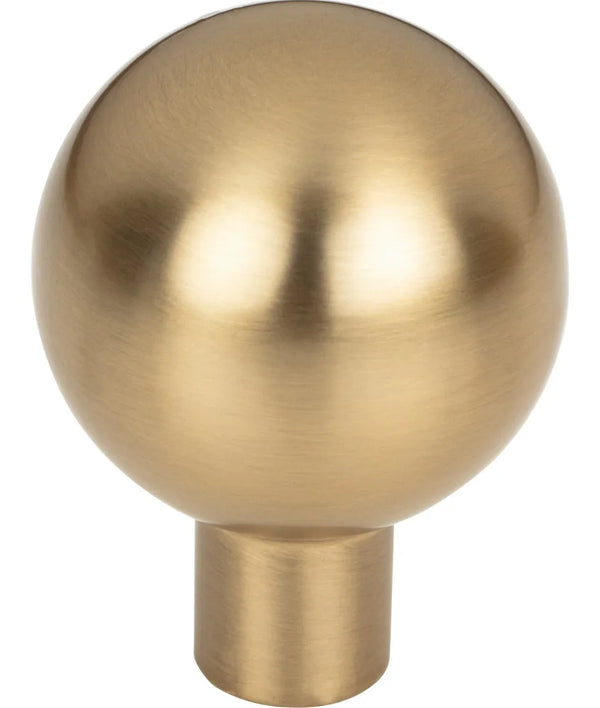
Barrington draws on the visual language of English country houses — fluted columns, gently arched silhouettes, weight that feels confident rather than precious. It's the collection for kitchens that want to feel old in the best sense.
What Barrington brings to a kitchen
The pulls have a controlled fluting along the shaft that catches light and gives the hardware visual texture without ornament. The knobs read as substantial and symmetrical, the kind of profile you'd find on a Sussex stone-built kitchen from a hundred years ago. There's nothing fussy in the Barrington line; the heritage references are structural, not decorative.
That structural-heritage quality is what makes Barrington feel grown-up rather than nostalgic. The hardware doesn't apologize for being traditional, but it also doesn't lean into Victorian ornament that would date a kitchen quickly.
The kitchens Barrington belongs in
Traditional and traditional-leaning transitional. Painted shaker cabinetry with substantial trim. Wide-plank wood floors, often dark-stained. Soapstone, honed marble, or limestone counters. Country houses, refined colonial revivals, and homes with original architectural detail worth honoring.
If you want even more traditional weight, look at Edwardian or Britannia. If you want a slightly more refined transitional read, Pemberton sits adjacent.
Barrington finish strategy
Heritage shapes ask for warm finishes. Oil Rubbed Bronze is the heritage default and reads correct in almost any traditional kitchen. Honey Bronze is the lighter warm choice for transitional spaces. Polished Nickel takes Barrington in a slightly more refined direction — Edwardian-formal rather than country-house-warm.
Order samples in your top two finishes. Heritage hardware especially benefits from being seen against your specific cabinet color and stone before commit.