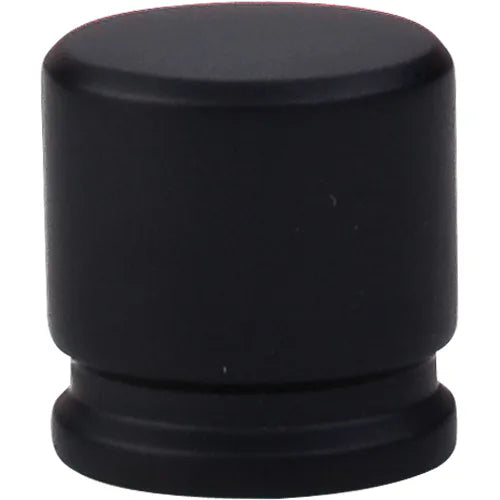
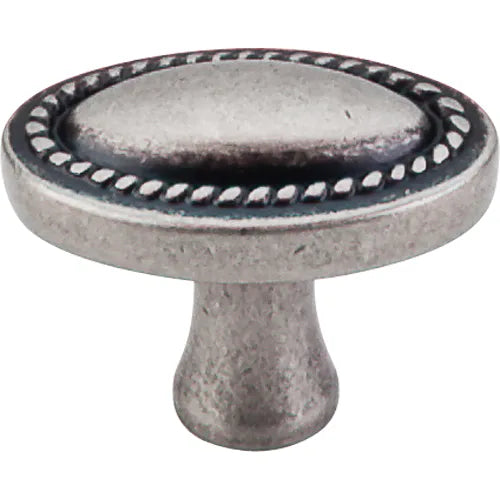
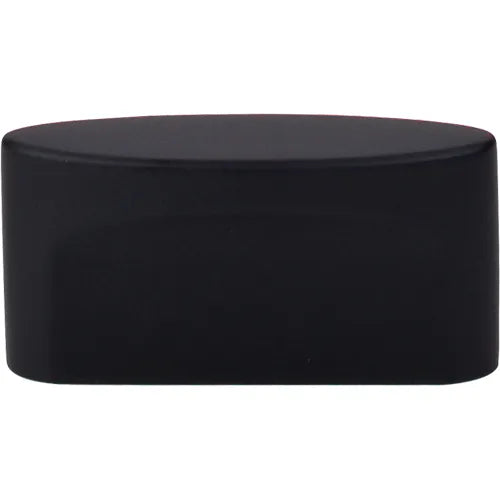
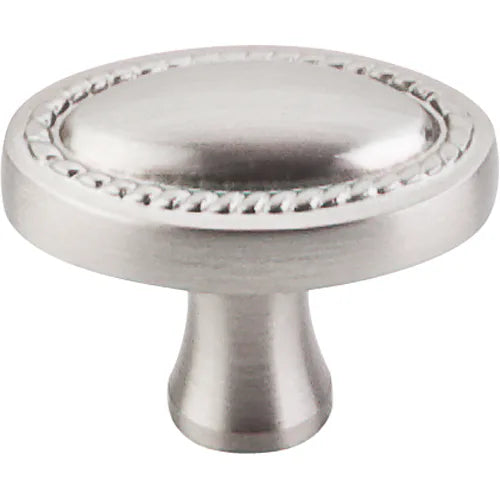
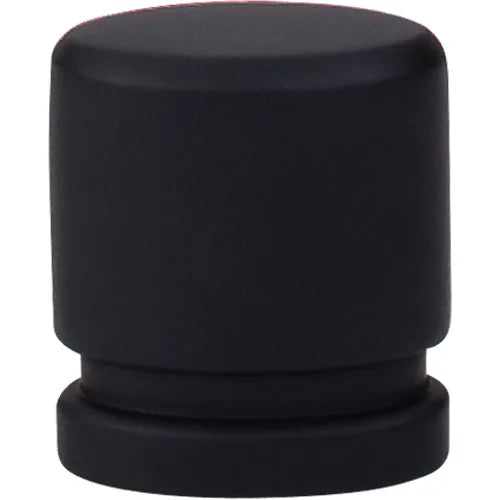
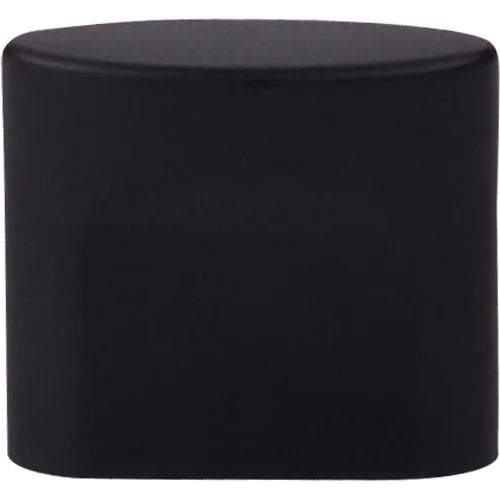
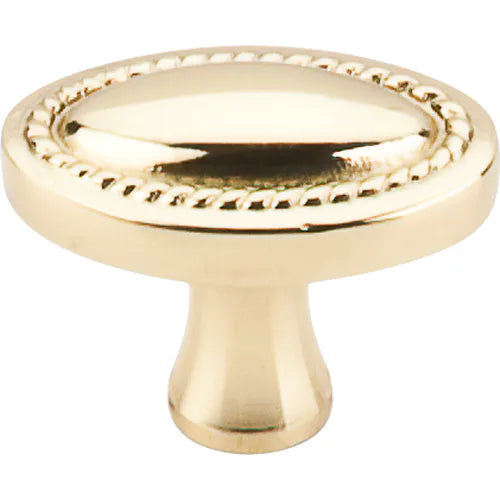
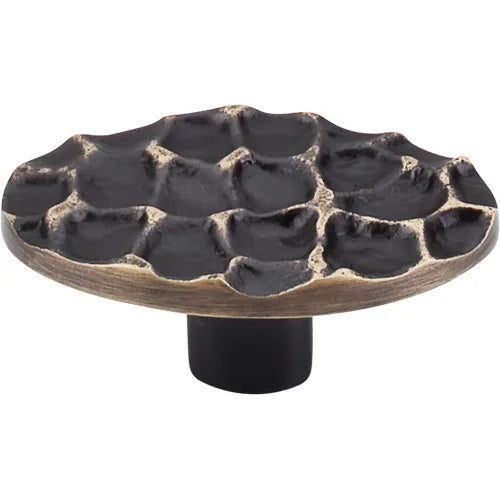

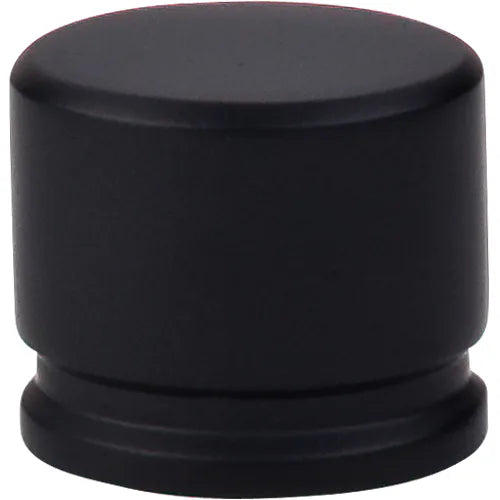
The oval cabinet knob sits in a refined corner of the catalog — slightly more directional than a round, slightly more delicate than a square. The shape designers reach for when "round" reads too generic and "square" reads too modern.
What an oval knob does in a kitchen
An oval is a deliberate decision. The horizontal axis of the silhouette catches the eye in a way a round knob never will, lending the door a quiet bit of jewelry. In refined transitional kitchens — particularly painted shaker with marble counters — oval knobs read as carefully chosen rather than off-the-shelf.
That refined quality is what makes oval knobs a favorite for primary baths, vanities, and dressing rooms. The horizontal proportion reads beautifully on drawer fronts and door fronts at bath-cabinet scale.
Where oval knobs belong
Refined transitional kitchens with painted shaker. Primary bathrooms with quartz or marble vanities. Dressing rooms and walk-in closets where every detail is curated. Pied-à-terre kitchens, butler's pantries, and the kind of secondary spaces where a touch of jewelry reads correct.
For a more universal silhouette, see round knobs; for something more architectural, T-knobs reads modern.
Oval knob finishes that flatter
Refined silhouettes deserve refined finishes. Polished Nickel reads classical. Brushed Satin Nickel is the everyday workhorse. Honey Bronze warms the silhouette into 2026-current territory.
Order samples alongside round knobs in the same finish — the silhouette difference reads more clearly in person than in product photos.