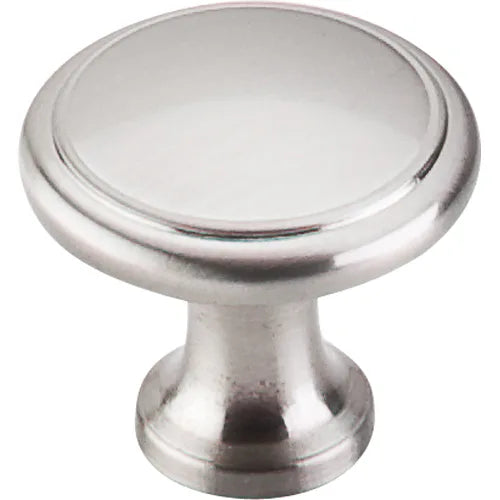
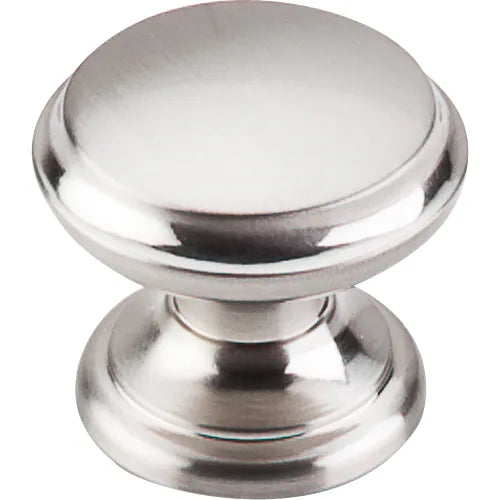
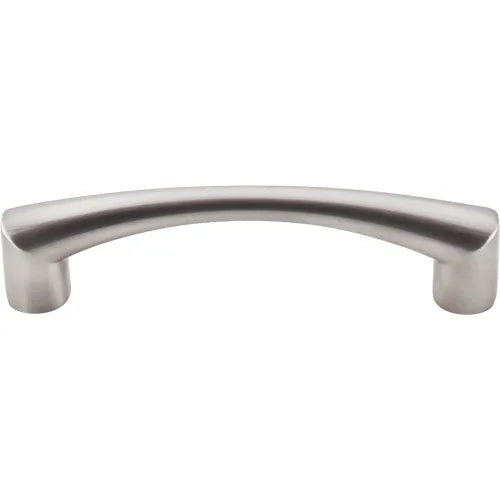
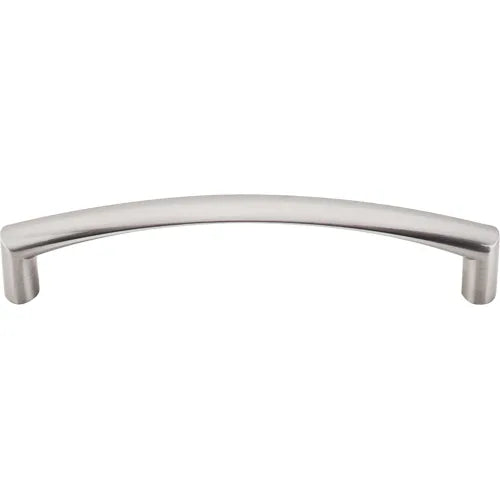
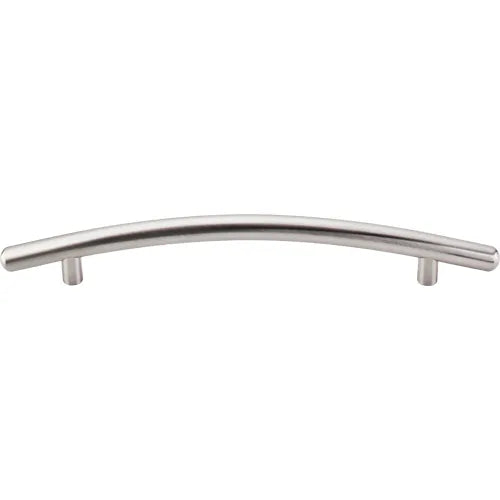
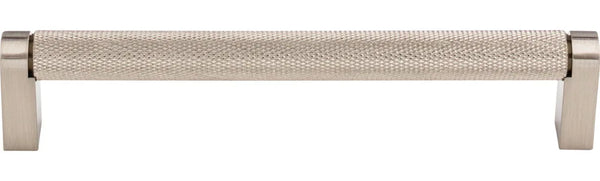
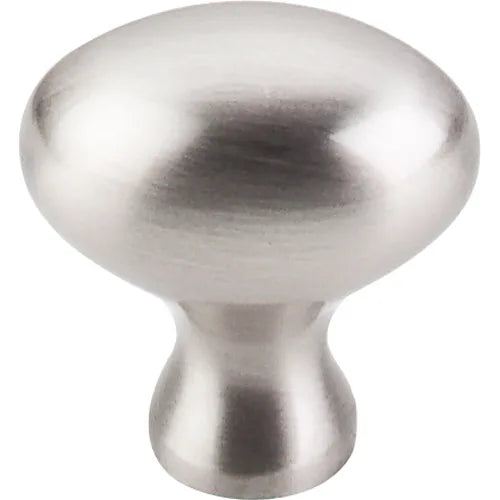
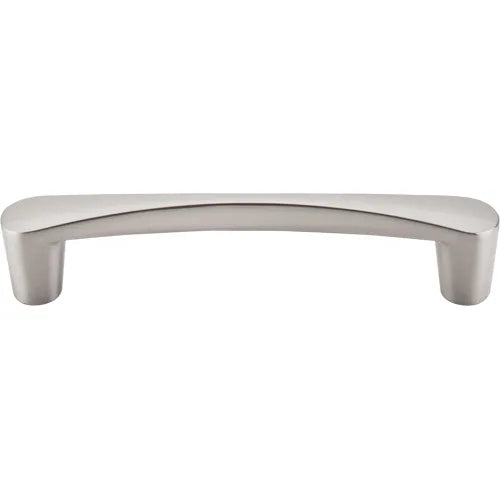
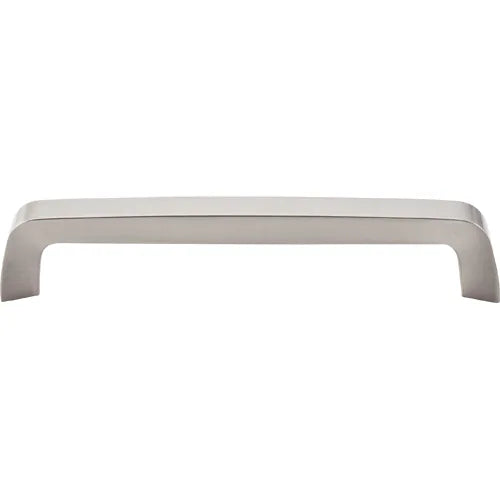
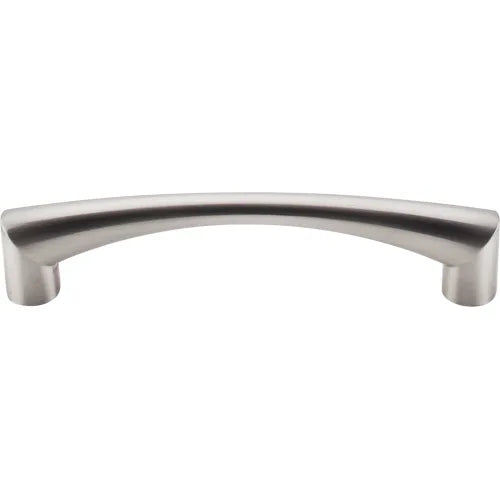
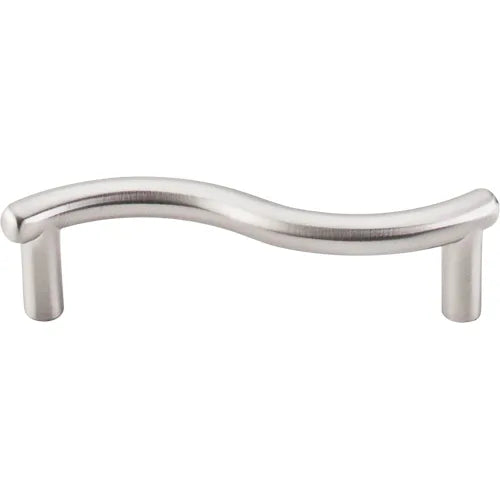
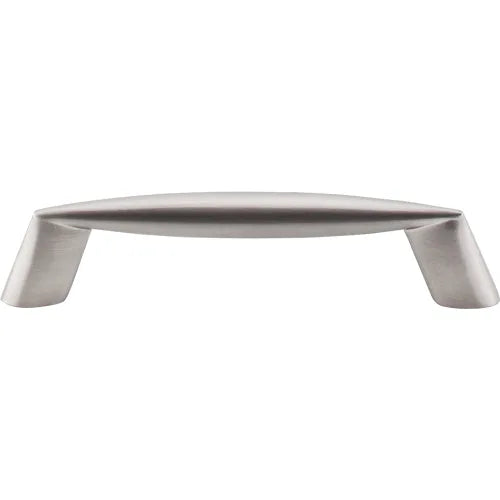
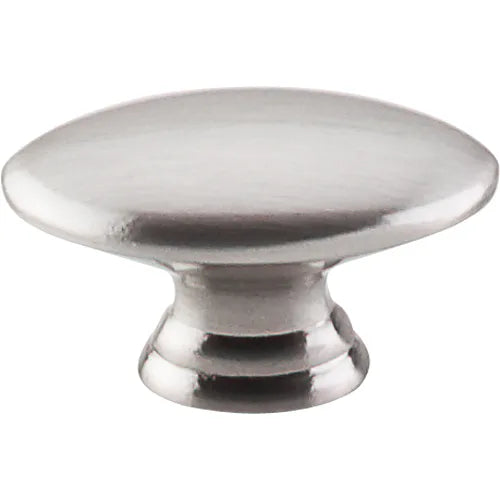



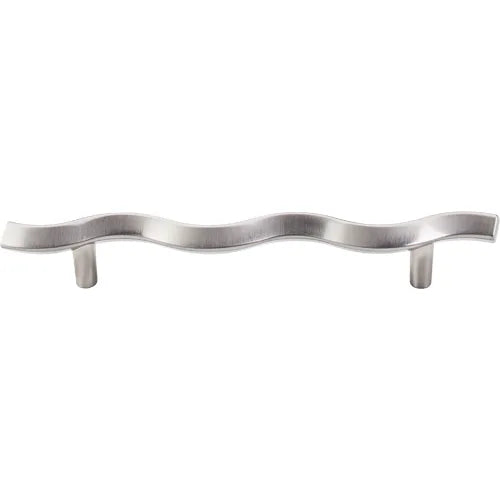
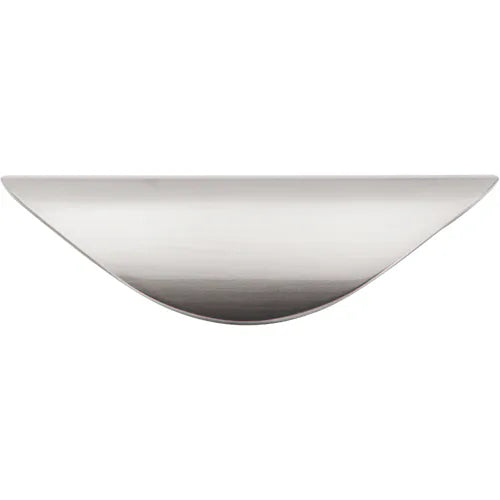
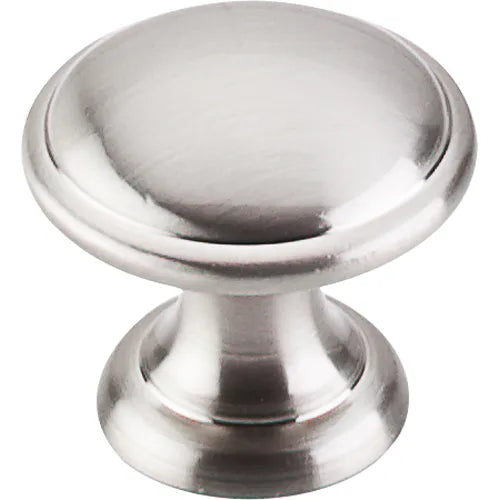
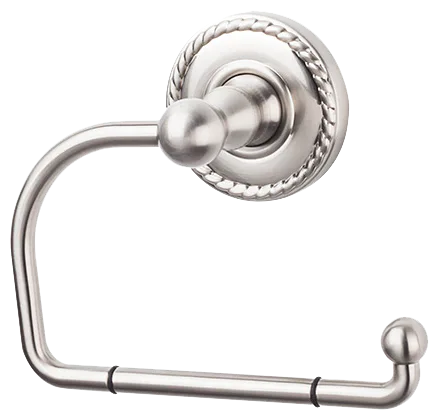
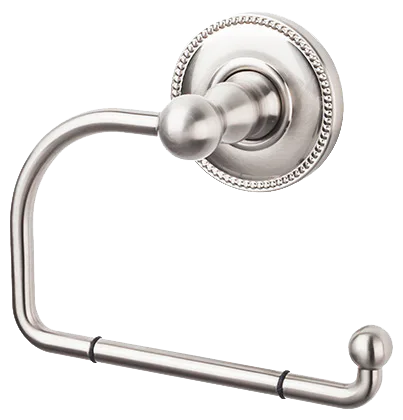
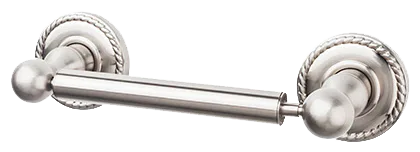
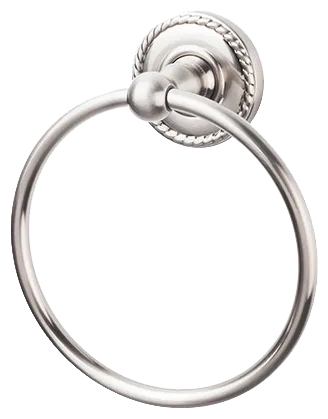
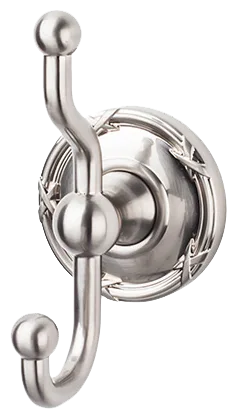
Brushed Satin Nickel is what designers reach for when Brushed Nickel feels too utilitarian and Polished Nickel feels too dressy. It splits the difference and ends up being the finish that quietly does the work in some of the best-photographed kitchens of the last decade.
How Brushed Satin Nickel reads
The grain is finer than standard brushed nickel — closer to a polished surface that's been gently muted than to a directional brush. The undertone has a touch of warmth that keeps it from going industrial. In direct overhead light it almost reads as soft pewter; under cabinet lighting at night, it picks up a quiet glow.
This is the finish that disappears into the kitchen during the day and comes alive in evening light. That's a useful property. The kitchen you cook in at noon and the kitchen you pour a drink in at 8pm aren't really the same room.
Where Brushed Satin Nickel works
Refined transitional kitchens with painted shaker and marble. Primary baths with double vanities and matching plumbing. Closets and dressing rooms where the hardware should feel jewelry-adjacent without showing off.
It pairs cleanly with both warm and cool palettes — easier to land than its siblings Polished Nickel (more formal) and Brushed Nickel (more matter-of-fact). For mixed-metal projects, Brushed Satin Nickel against unlacquered brass is one of the most-shipped pairings in our catalog.
Brushed Satin Nickel through use
The fine grain hides ordinary use better than polished metals but isn't as bulletproof as standard brushed nickel — fingerprints occasionally need a microfiber wipe. The trade-off for that is a finish that reads more refined the moment you walk into the room. Most homeowners decide it's worth it.
Order samples in Brushed Satin Nickel alongside Brushed Nickel and Polished Nickel. The three live within a narrow range and look very different against the same cabinet front.