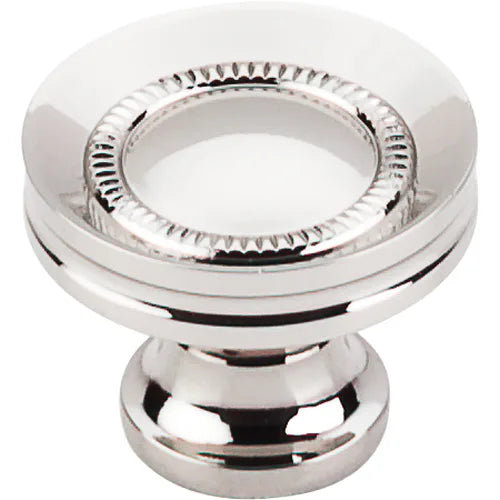
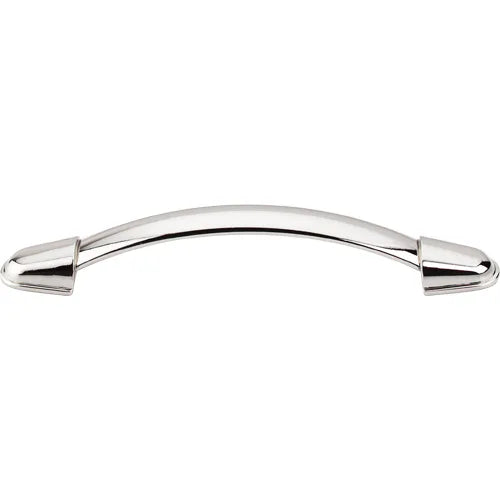
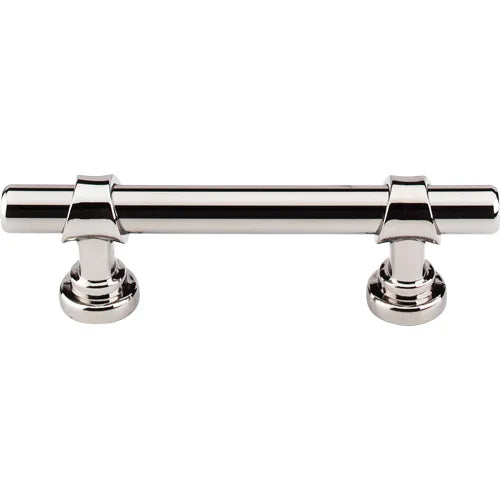
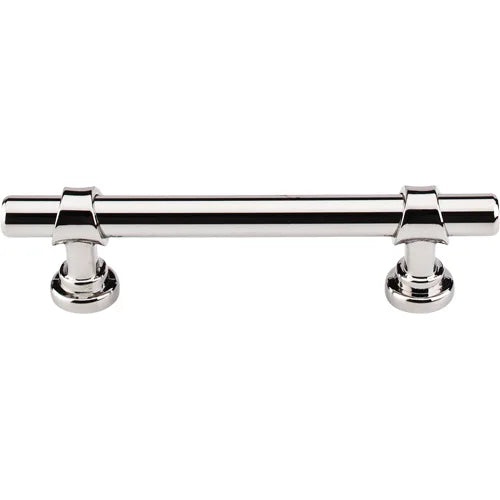

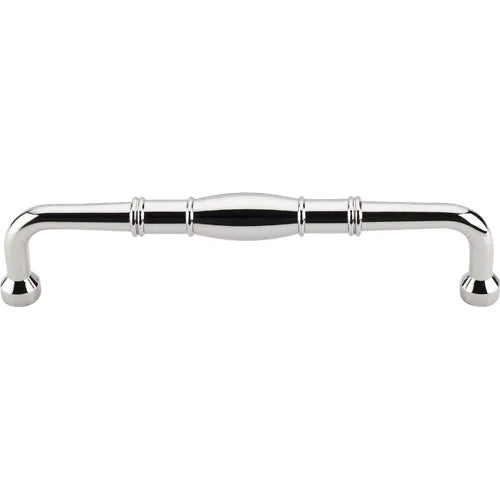
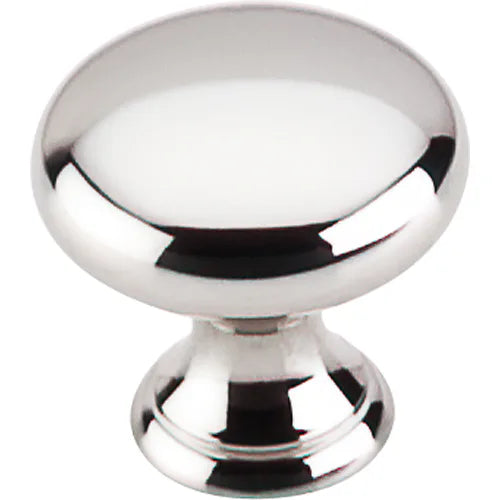
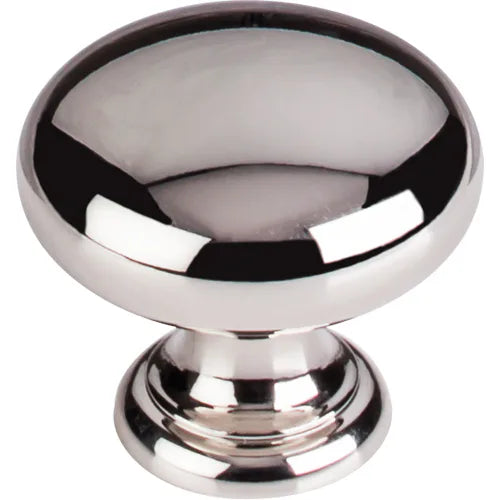
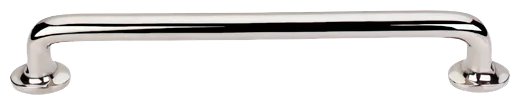
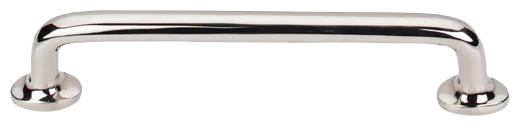
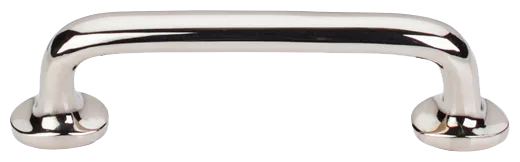


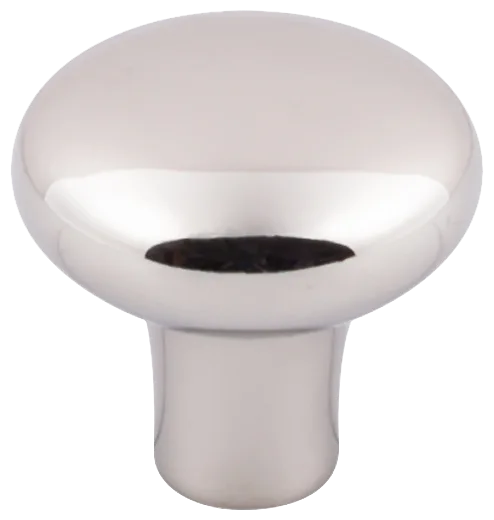
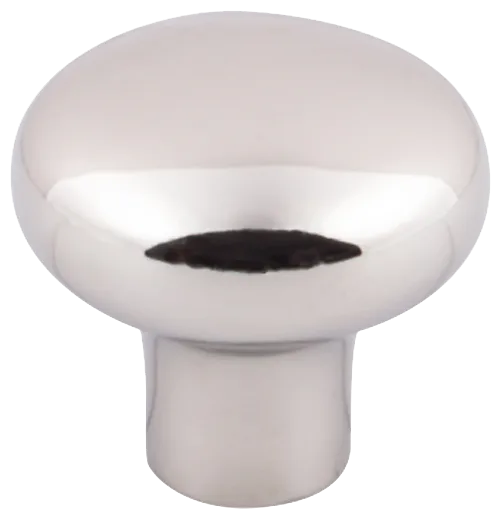
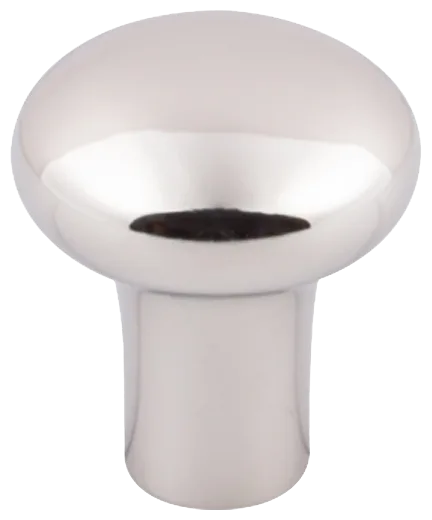
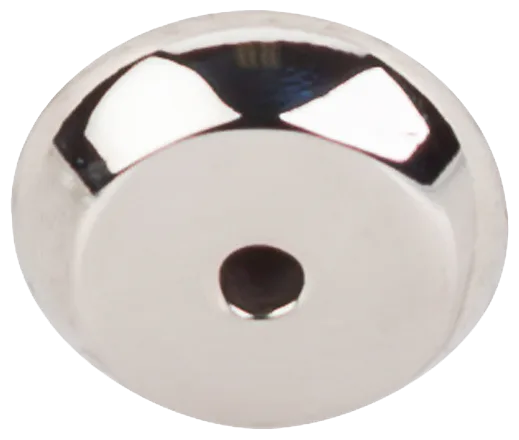
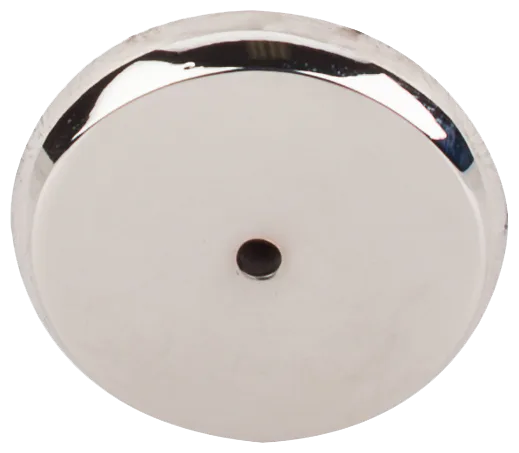
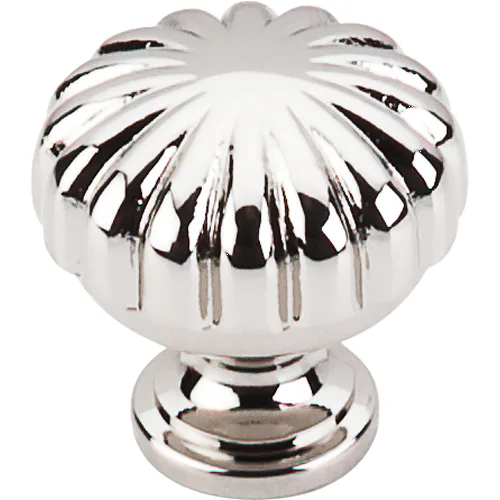
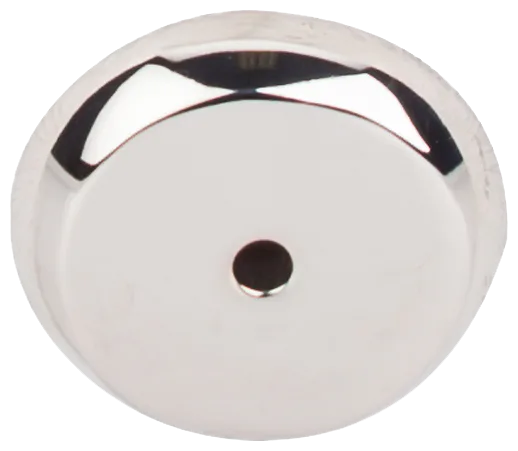
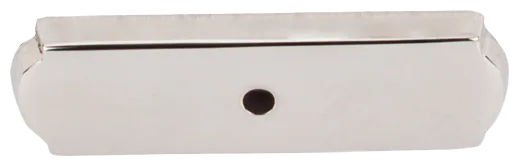
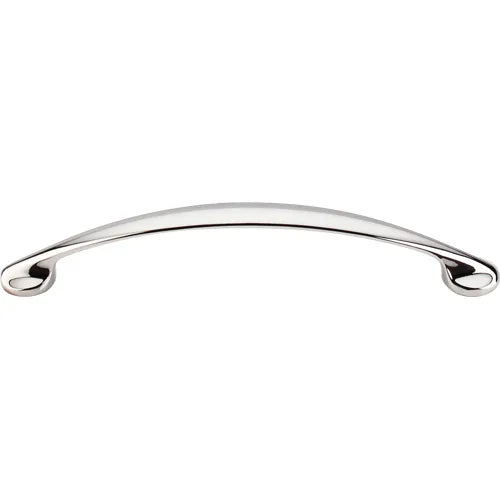
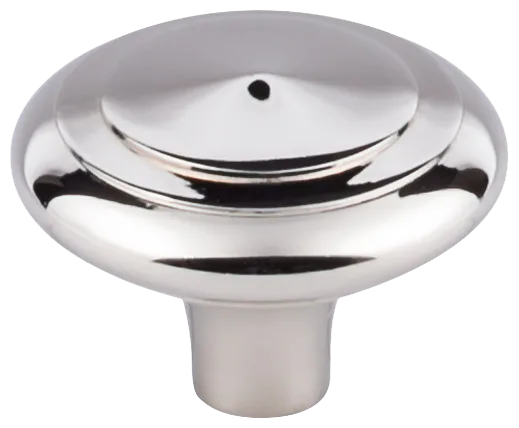
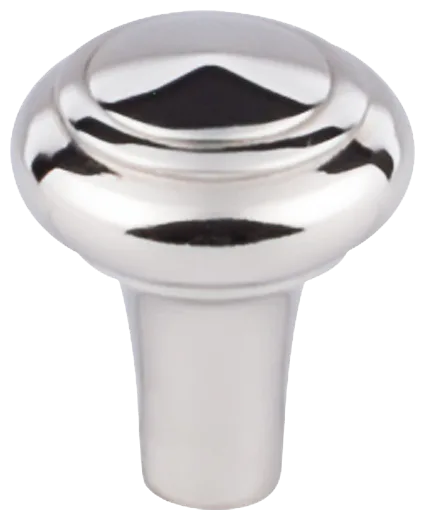
Polished Nickel is what happens when you take the brightness of chrome and add a degree of warmth. The result is a cool finish that doesn't read cold — and a kitchen that feels expensive in a way that's hard to put a finger on.
Polished Nickel versus Polished Chrome
Side by side, the difference is unmistakable. Chrome has a blue undertone — clean, sharp, slightly clinical in cool light. Polished Nickel has a yellow undertone — softer, warmer, slightly older-feeling in the best way. In photographs the two often look identical. In person, they live in different rooms.
Polished Nickel is the finish you specify when you want chrome's brightness with a touch more dignity.
Where Polished Nickel belongs
Refined transitional kitchens with painted shaker. Primary bathrooms with marble or limestone counters. Pantries and butler's bars. Houses with original molding, picture rails, plaster walls — Polished Nickel cabinet hardware ties to the architectural language of the home in a way modern cool finishes don't.
It pairs cleanly with both warm and cool palettes, which is part of why designers reach for it on transitional projects. Against polished brass plumbing it reads expensive and considered; against chrome plumbing it reads cohesive and restrained.
Polished Nickel in real life
Like all polished metals, Polished Nickel shows fingerprints — daily microfiber wipe handles them. The advantage of polished nickel over polished chrome is that the warmer undertone hides ordinary smudge marks slightly better, which makes the maintenance bar lower in a working kitchen.
Order samples in Polished Nickel against Polished Chrome and Brushed Satin Nickel. The three are closest cousins in the cool-finish family — and pick the wrong one and you'll feel it for ten years.