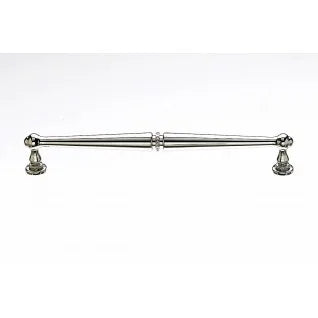
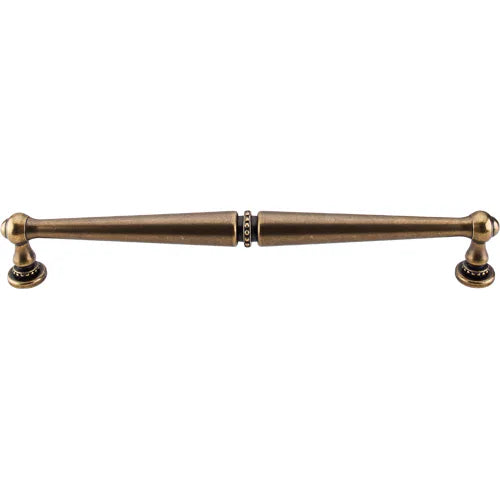
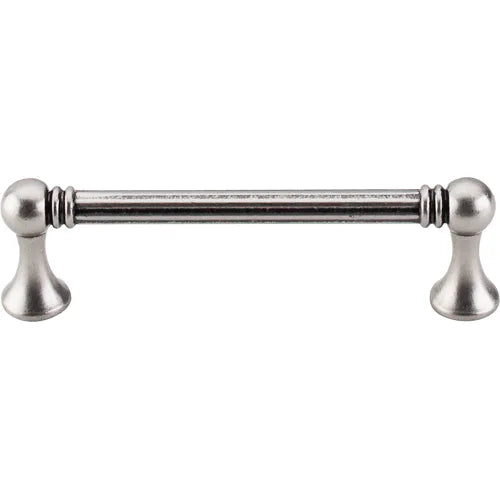
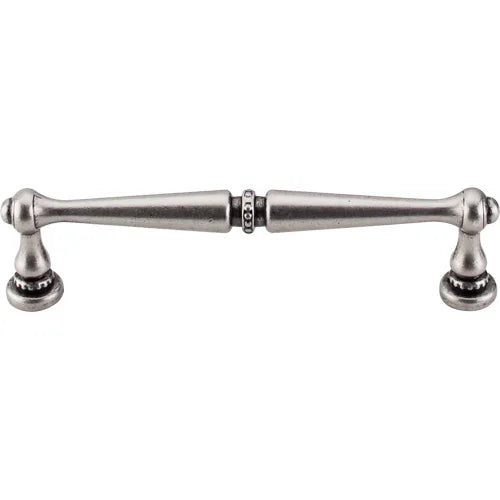
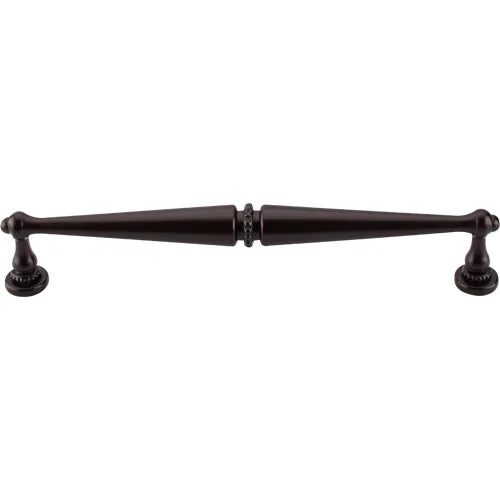
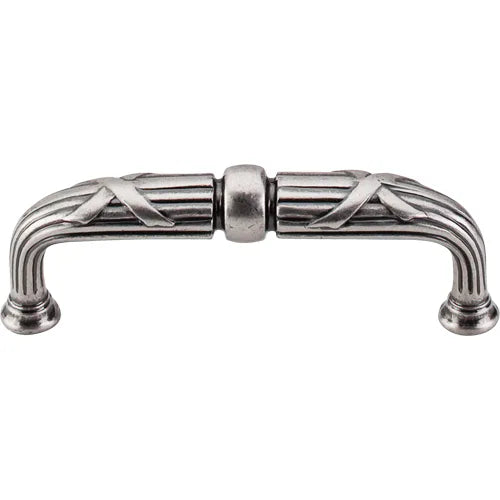
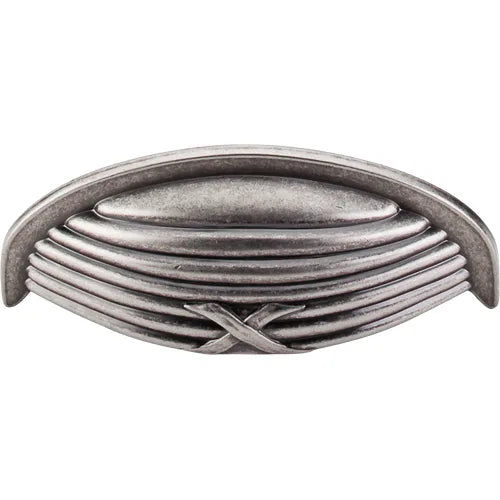
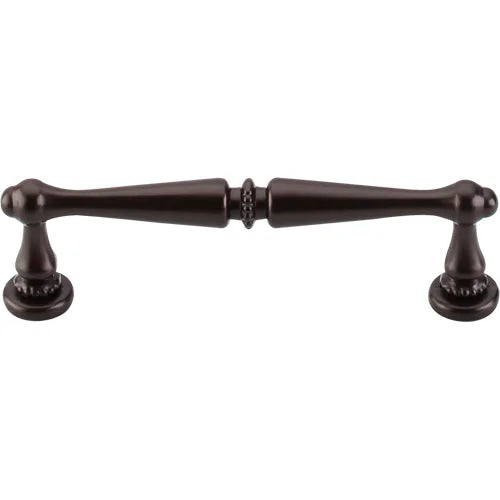
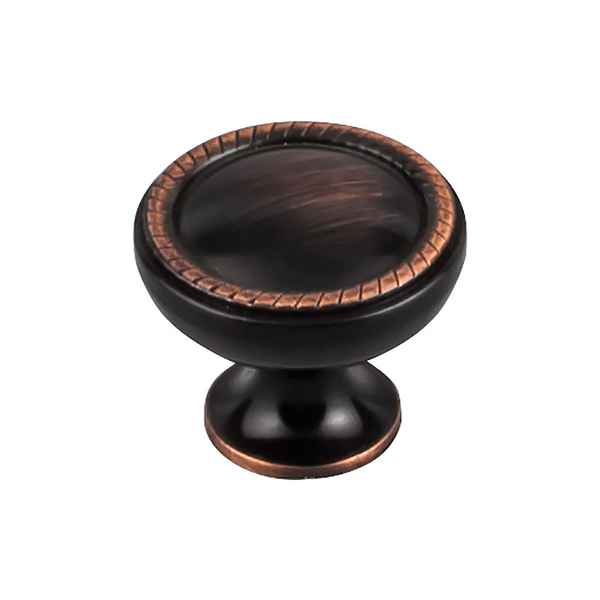
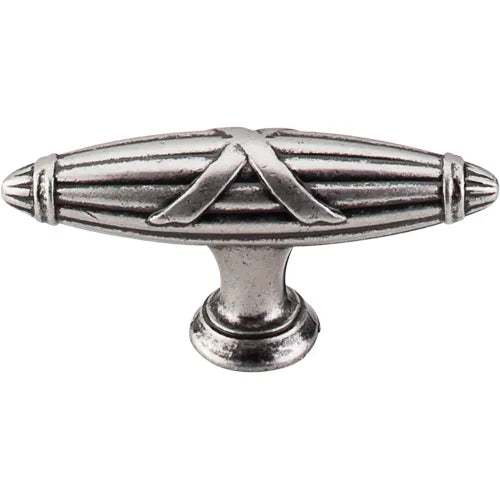
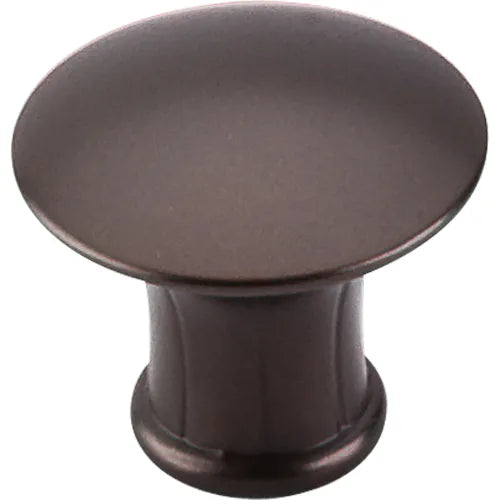
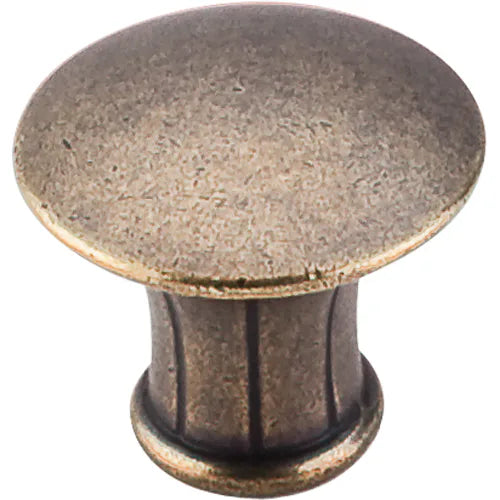
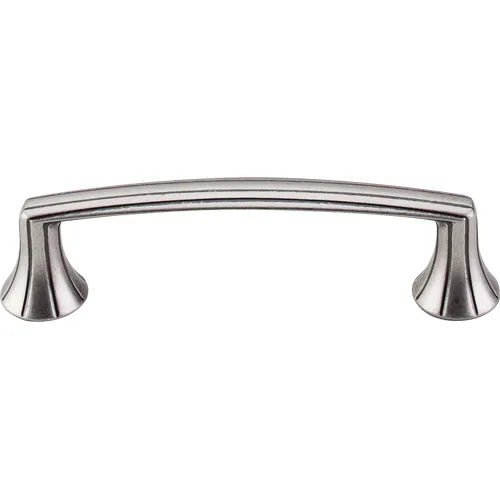
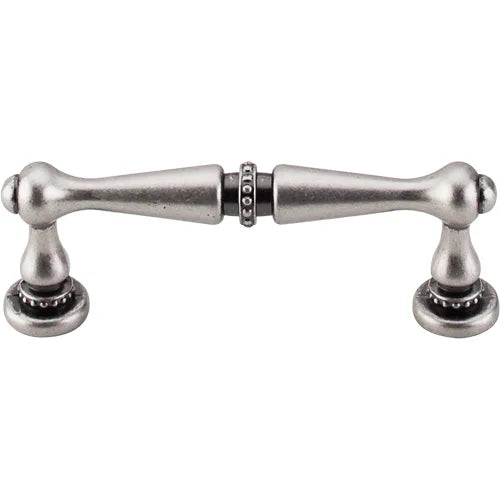
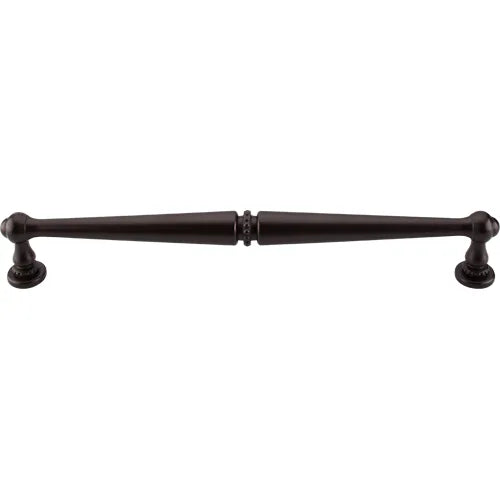
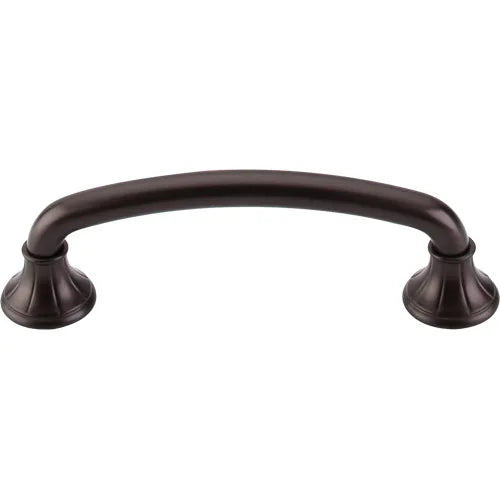
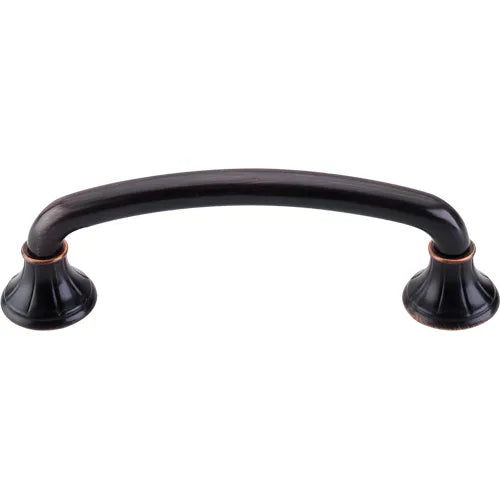
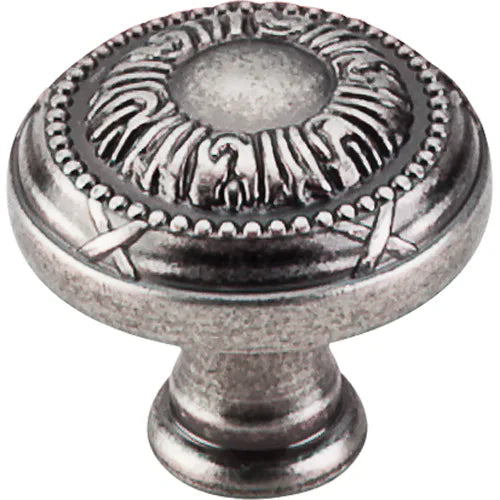
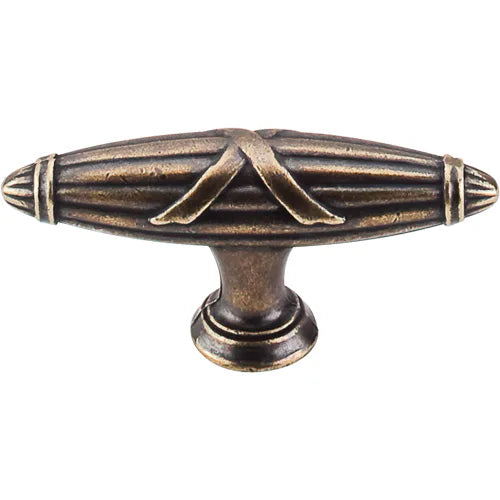
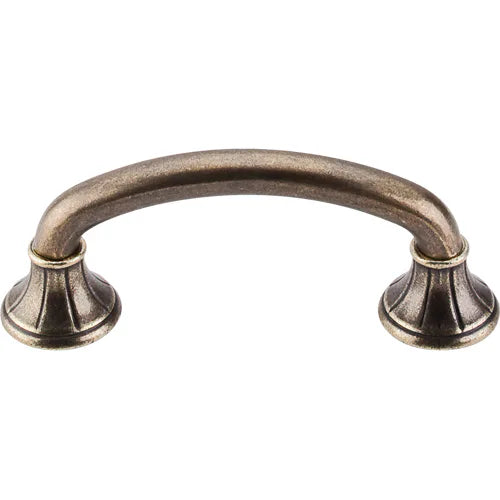
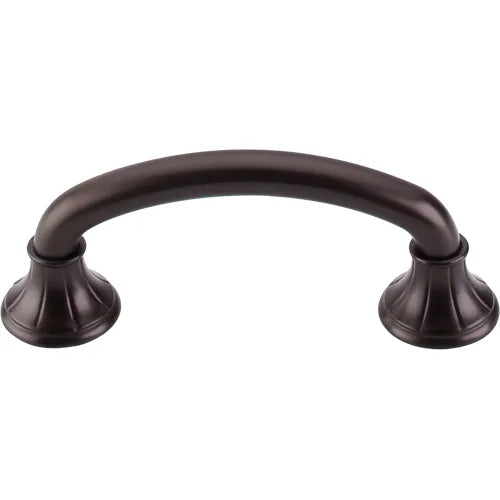
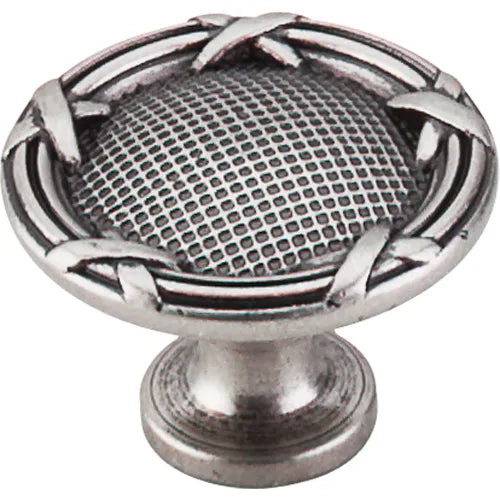
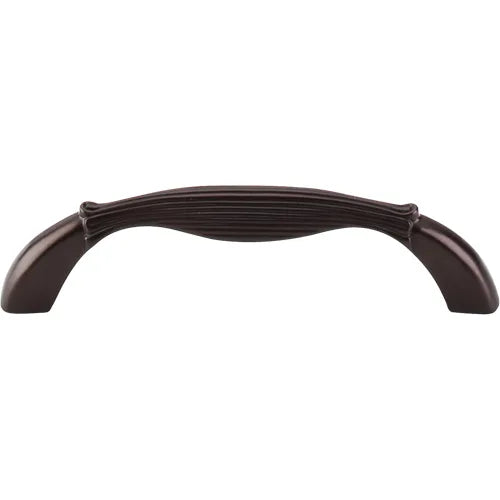
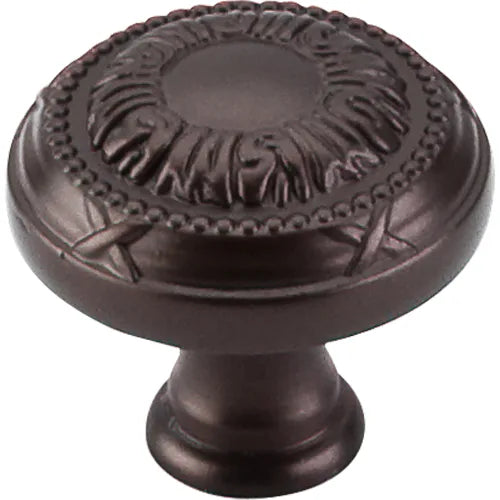
The Edwardian era — 1901 to 1910 — produced some of the most disciplined formal residential design in modern history. The Top Knobs Edwardian collection draws on that visual language: detailed but never ornate, formal without being heavy, classical without slipping into Victorian Revival.
The Edwardian design vocabulary
Subtly stepped detail at the base of knobs. Pulls with refined turning along the shaft. Restrained beading at terminations. The pieces are visibly more detailed than transitional collections like Pemberton but stop well short of the heavy ornament associated with full Victorian Revival hardware. The discipline is the point.
That formal-discipline character is what makes Edwardian work in homes that want traditional weight without slipping into pastiche. Edwardian doesn't apologize for being detailed; it also doesn't perform.
Where Edwardian fits
Refined-traditional kitchens in Federal, Georgian Revival, Edwardian-period (true period homes), and refined Tudor architecture. Houses with original molding, picture rails, plaster ceilings, and pre-war detail worth honoring. Primary bathrooms in older homes.
Edwardian struggles in transitional or contemporary settings — the formality reads costumed in casual interiors. For traditional-leaning transitional, Coddington or Devon sit one step less formal.
Edwardian finishes
Edwardian's formal character carries refined-classical finishes especially well. Polished Nickel is the period-correct default — Edwardian-era hardware was often polished nickel or polished brass. Polished Chrome works in slightly more contemporary takes on traditional. For warm-traditional, Oil Rubbed Bronze and German Bronze are the moves.
Order samples in your top two finishes. Edwardian's detail shows finish character at every scale; the sample is the most useful evaluation tool.