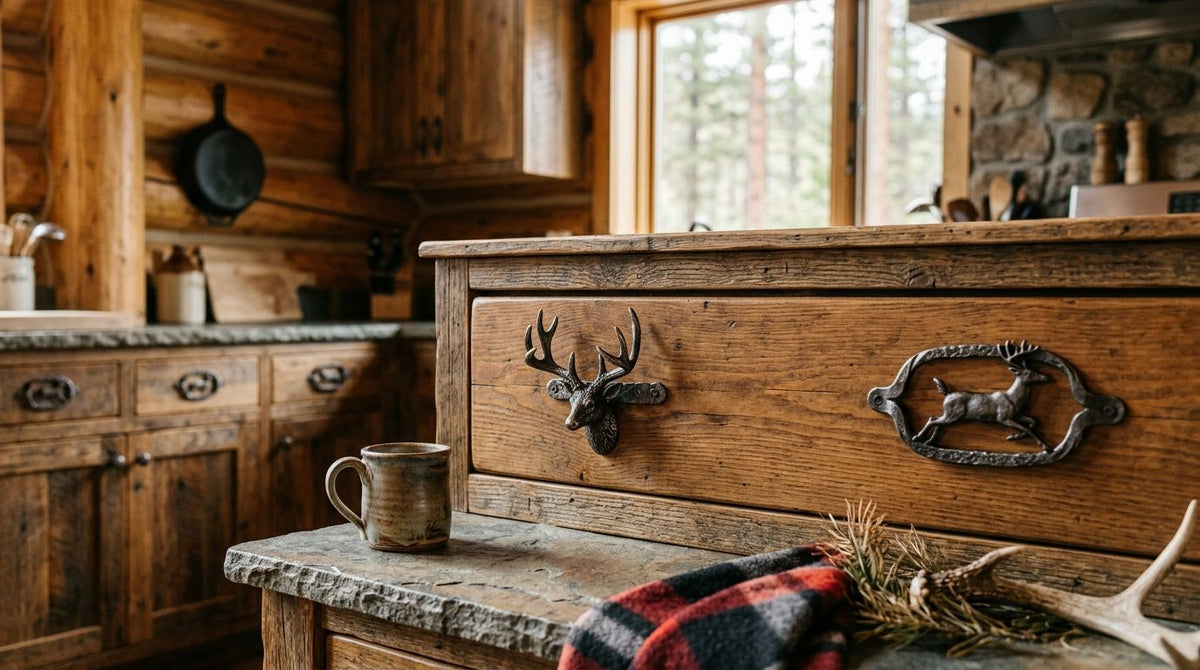
Hunting cabin and lodge kitchen cabinet pulls have to survive muddy gloves, woodsmoke grime, and humidity swings that a subdivision kitchen never sees — the finish and grip that hold up in a suburban remodel fail fast once a cabin sits closed up through a wet spring or a cold winter. This segment needs hardware sized for gloved hands, finished to hide grime rather than show it, and tough enough to shrug off condensation cycles.
- Cabinet pulls for hunting cabin kitchens hold up best in oil-rubbed bronze, cast iron, or flat black finishes.
- Bar pulls and T-handles with 4-8 inch centers outperform small knobs for gloved or wet-hand grip in 2026 cabin kitchens.
- The Britannia Warwick cast iron knob and Dakota Charlotte oil-rubbed bronze pull both suit rustic cabin cabinetry.
- Skip polished chrome and nickel in a cabin kitchen — fingerprints and water spots show fast against dark wood and stone.
Why cabinet pulls matter for hunting cabin and lodge kitchens
A cabin kitchen doesn't get handled the way a full-time home kitchen does. Cabinets open with wet hands after cleaning fish, with work gloves still on during a firewood run, or with cast-iron cookware in one hand — the hardware takes more torque and more grime per use than a suburban kitchen sees in a month.
Most hunting cabins and lodges also sit unheated or uncooled for stretches of the year, which means cabinet faces cycle through condensation more than a climate-controlled house. Plated brass and polished chrome show that cycle fast — water spots, fingerprints, and early tarnish. A dark, low-sheen finish like oil-rubbed bronze or cast iron hides that wear instead of advertising it, and it reads correctly next to reclaimed wood, stone, and wrought iron fixtures that already define most lodge interiors.
The Knobs Co catalog carries the dark and raw-material finishes this segment actually needs, alongside the polished options built for a different kind of kitchen entirely.
Match the finish to your cabin's material palette
Start with what's already on the walls and floor, not what looks good on a showroom card. The finish has to sit next to reclaimed pine, stone, or cast iron fixtures without looking imported from a different house.
- Oil-rubbed bronze — pairs with reclaimed pine and hides fingerprints and water spots faster than any bright finish.
- Flat black — reads modern-rustic against soapstone or matte cabinetry, low-sheen enough it won't glare under a single overhead bulb.
- Cast iron — a raw, working-hardware look that matches wrought-iron light fixtures and stone hearths.
- Antique pewter — a softer gray-brown for whitewashed or knotty pine cabinets.
- Honey bronze — a warmer cast for cabins built around cedar or fir.
The Dakota Charlotte pull in oil-rubbed bronze is a straightforward pick if your cabin leans toward dark wood and stone.
Choose pull style over knobs for gloved hands
A small round knob is the hardest thing to grab with a wet hand or a work glove. Bar pulls and T-handles give fingers a straight edge to hook under, which matters most during hunting season when hands are rarely bare or dry.
- Bar pulls, 4"-8" centers — enough surface for two fingers or a full glove.
- T-handles — a vertical grip that works well on tall pantry and gun-cabinet doors.
- Drop/bail pulls — traditional look, but less secure for wet-hand grabbing than a straight bar.
- Cup pulls — fine on lower drawers, awkward for gloved fingers reaching up.
- Round knobs — reserve these for glass-front cabinets or a hutch, not daily-use doors.
For a glass-front cabinet or hutch, the Britannia Warwick knob in cast iron keeps the raw-material story going without sacrificing grip on a lighter door.
Size pulls for high-traffic cabinets
A base cabinet, pantry door, or gun and tack storage door in a lodge kitchen takes far more daily handling than an upper cabinet holding glassware. Sizing up avoids loose screws and fumbled grips over a season.
- Base cabinets and pantry doors: 6"-8" pulls at minimum.
- Kitchen islands: 8"-12" bar pulls hold up to constant use from multiple people.
- Upper cabinets: 3"-4" pulls or a single knob is enough.
- Mudroom and appliance-adjacent cabinets: size up to 12"+ where gloves and firewood carriers pass through daily.
Prioritize humidity and rust resistance
A cabin left closed up through winter or summer sees condensation cycles that plated hardware doesn't handle well. The finish needs to survive the climate, not just look the part.
- Oil-rubbed bronze and flat black powder coats resist surface rust better than plated brass in a damp cabin.
- Cast iron develops a natural patina rather than flaking — expect the finish to darken with handling, not chip.
- Stainless steel pulls handle galley-style and boat-adjacent cabin kitchens without pitting.
- Skip unlacquered brass in a cabin left shut up for months at a time — it tarnishes unevenly without regular handling to even it out.
Order samples before you commit a full kitchen
Hardware finish reads differently under a headlamp or a single overhead bulb than it does under showroom lighting. Ordering a sample or two before buying for the whole kitchen avoids a mismatch you can't return by the box.
- Hold a bronze and a cast iron sample side by side under the cabin's actual light.
- Test grip with a work glove on, not bare-handed — that's how the hardware gets used most of the year.
- Check the pull against your darkest cabinet stain — dark hardware can disappear against very dark wood.
- Order two finishes if you're mixing an island with perimeter cabinets.
Install with the right jig and screw length
A full lodge kitchen's worth of doors and drawers is not the place to eyeball spacing. Consistency across dozens of cabinets is what makes hardware look intentional rather than patched together.
- Confirm center-to-center measurement before drilling — it varies by several inches across the finishes above.
- Use a hardware jig for repeat spacing across every door and drawer.
- Match screw length to material thickness — heavier bar pulls and T-handles need longer screws than a standard knob.
- Re-torque mounting screws after the first season; humidity swings can loosen them.


Comparing your options
| Option | Best for | Key limitation |
|---|---|---|
| Oil-rubbed bronze pulls | Perimeter cabinets next to stone or reclaimed wood | Finish can rub lighter with heavy daily handling |
| Flat black bar pulls | Modern-rustic cabins with soapstone or matte counters | Shows dust and water spots more than textured bronze |
| Cast iron knobs | Glass-front cabinets, hutches, gun cabinets | Heavier than plated hardware, needs sturdier screws |
| Antique pewter | Whitewashed or knotty pine cabinetry | Softer tone can wash out under warm lighting |
| Honey bronze | Cedar or fir cabin kitchens | Warmer cast doesn't suit cool gray stone interiors |
Verdict: oil-rubbed bronze and cast iron are the two finishes that consistently work across hunting cabin and lodge kitchens in 2026 — they hide grime, resist the rust that plated brass shows fast, and read correctly next to stone and reclaimed wood.
For barn-adjacent tack rooms and utility cabinets that share the same rustic material language, the guide on tack room and barn cabinet pulls covers hardware built for the same heavy-handling conditions.
Common mistakes lodge and cabin owners make
- Ordering polished chrome or nickel because a showroom stocked it — it shows fingerprints and rust spots fast in a cabin's damp cycle.
- Undersizing pulls so a gloved hand can't get a full grip during hunting season traffic.
- Matching pulls but ignoring hinges and latches, leaving two different metals on the same door.
- Skipping samples and ordering an entire kitchen's worth of one finish sight-unseen.
- Choosing a finish for looks alone without checking rust resistance for an unheated cabin.
FAQ
What's the best cabinet pull finish for a hunting cabin kitchen?
Oil-rubbed bronze and cast iron are the two finishes that hold up best in cabin kitchens in 2026. Both hide fingerprints and water spots and pair naturally with reclaimed wood and stone.
Are knobs or pulls better for cabin kitchens with heavy glove traffic?
Bar pulls and T-handles work better than knobs for gloved or wet hands. A straight edge is easier to hook a gloved finger under than a small round knob.
Do oil-rubbed bronze pulls rust in a humid cabin?
Oil-rubbed bronze resists surface rust better than plated brass or chrome, though no finish is fully rust-proof in a cabin left closed up for months. Cast iron and flat black powder coats perform similarly well.
How big should cabinet pulls be for a lodge kitchen island?
Island cabinets in a lodge kitchen hold up best with 8 to 12 inch bar pulls, since islands see the most daily handling from multiple people. Perimeter cabinets can run smaller, at 6 to 8 inches.
Is cast iron cabinet hardware durable for daily cabin use?
Cast iron holds up well for daily use and develops a natural patina rather than chipping or flaking. It's heavier than plated hardware, so confirm your screws are long enough for the material.
Can I mix cabinet hardware finishes in one lodge kitchen?
Mixing finishes works when there's a consistent undertone, such as pairing oil-rubbed bronze pulls with cast iron knobs on a hutch. Avoid mixing a warm bronze with a cool polished chrome in the same sightline.
How do I know what size pull fits my cabinet doors?
Measure the door or drawer face and leave room for a grip that matches how the cabinet gets used — base and island cabinets need larger pulls than upper cabinets. Confirm center-to-center spacing before drilling any holes.
One last thing
Cast iron cabinet hardware doesn't chip the way plated finishes do — it darkens and develops character with handling, which is exactly the look most lodge kitchens are going for anyway. If you're outfitting a full cabin kitchen in 2026, order a cast iron and an oil-rubbed bronze sample together before you commit to either one.