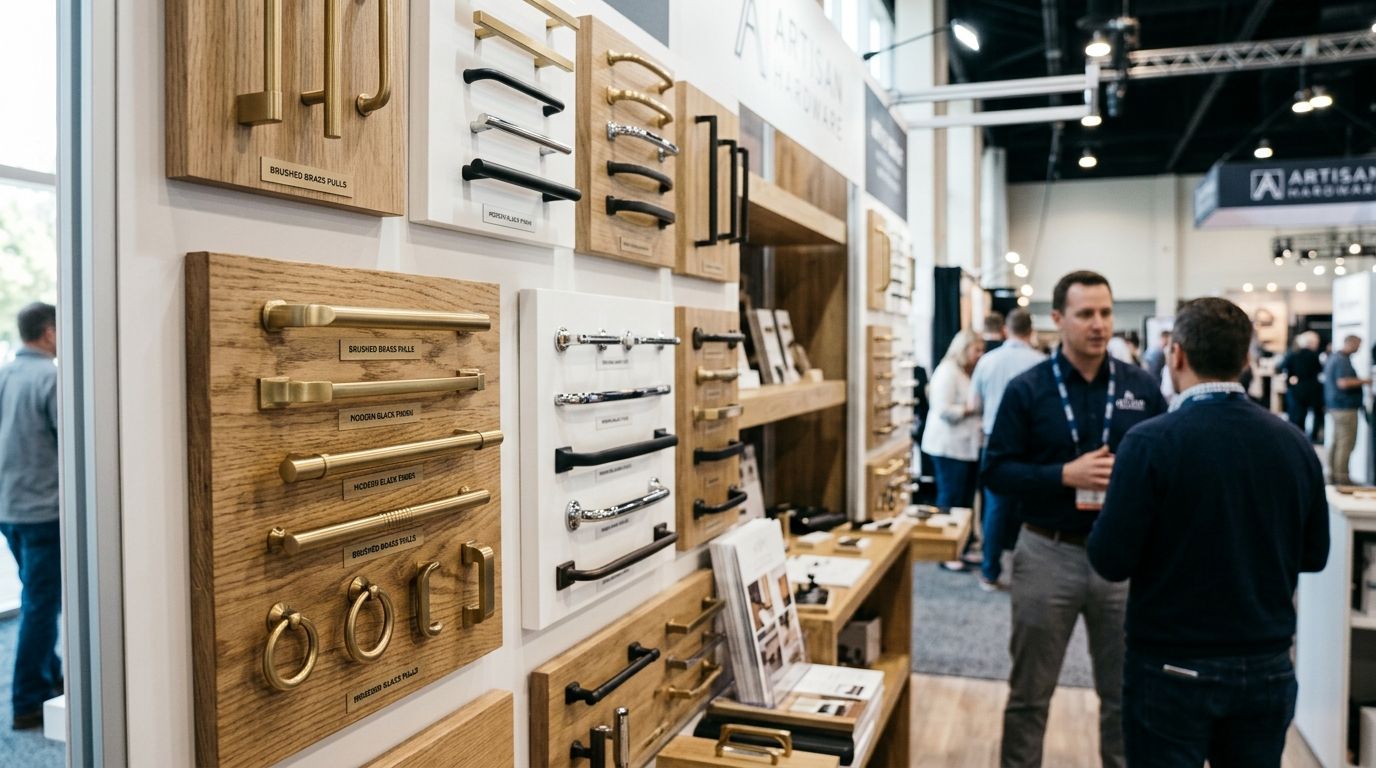
Cabinet pulls for trade show and pop-up retail displays need to survive repeated assembly, teardown, and shipping between events, not just look good sitting still in a showroom. The right pull for this segment is short, low-profile, and rated for hundreds of open-close cycles a year — a residential-grade knob picked for looks alone will loosen, snag on packing foam, or shear off inside six months of touring.
Exhibit builders, brand activation agencies, and retail display fabricators buy hardware differently than a homeowner doing one kitchen. You're speccing multiples of the same pull across dozens of identical cabinet modules, you're shipping the finished unit in a crate, and you need spares on hand because a broken pull mid-show means duct tape on a client's booth. Bulk quantities, low profile, and finish durability under travel wear matter more here than trend-matching a color palette.
- Low-profile T-handle and bar pulls under 1/2 inch projection resist snagging during pack-out for trade show cases in 2026.
- Cabinet latches beat pulls alone when a display case needs to lock overnight on the show floor.
- Order 10-15% spare hardware per booth kit — lost screws and stripped holes are the most common field failure.
- Knobs.co stocks bulk cabinet hardware for contractors and builders, which covers exhibit fabricators ordering identical pulls across multiple modules.
Why cabinet pulls matter for trade show and pop-up retail builds
A trade show cabinet or pop-up kiosk gets built and broken down anywhere from 4 to 20+ times a year, depending on the event calendar. That's 4 to 20+ cycles of a pull getting grabbed, a panel getting racked into foam, and a case getting stacked in a truck — compared to a kitchen cabinet that might see two open-close cycles a day for a decade with zero shipping stress.
The hardware that survives that isn't the hardware a residential remodeler specs. Booth builders lean toward bar pulls and T-handle pulls set flush or near-flush to the panel face, and they add latches wherever a case needs to stay closed and secured overnight without staff present. Contractors and fabricators buying bulk cabinet hardware for contractors and builders already order this way — one finish, one length, dozens of units, ordered again next quarter for the next build cycle.
Build your trade show display hardware list
Measure your panel and drawer depth before you order
Exhibit panels run thinner than kitchen cabinet doors — often 1/2 inch to 3/4 inch MDF or lightweight composite — so screw length matters more here than in a standard remodel.
- Measure panel thickness at the exact mounting point, not an average across the booth
- Check for a backer block or reinforcement behind thin panels before drilling
- Confirm the pull's mounting screws will seat fully without poking through the face
- Note drawer box depth separately if the display includes sample drawers
Choose pull length based on booth panel width
A narrow accessory panel or product sample drawer needs a shorter pull than a full kiosk door — oversized hardware on a small panel looks wrong and catches more often in transit.
- Match pull center-to-center spacing to the panel width, leaving even margins on both sides
- Use a 3 inch to 4 inch pull for narrow accessory drawers and sample cases
- Step up to a 6 inch to 8 inch bar pull for full kiosk or counter doors
- Standardize on one or two lengths across the whole booth kit so replacement stock stays simple
The 3 inch bar pull size works well on sample drawers and narrow accessory panels where a full-length bar pull would overwhelm the door.
Pick low-profile pulls that survive repeated packing
This is the step where most first-time exhibit builders lose hardware — a decorative pull with deep relief or a high-profile knob catches on packing blankets and foam corners every single load-in.
- Favor bar pulls and T-handle pulls with a flat or near-flush back profile
- Skip pulls with sharp decorative edges that can tear packing foam or fabric wraps
- Test the pull against your actual shipping crate foam before ordering the full quantity
- If knobs are required by the design, choose a rounded, low-relief knob over anything with protruding detail
Ordering samples first before committing to a full booth kit run is the faster way to confirm fit — pull a handful of finishes and lengths, mount them on a scrap panel, and run it through one pack-and-unpack cycle before the invoice for 200 units goes out.
Match finish to brand color and travel wear
Brushed and satin finishes hide handling marks better than polished chrome or bright brass on hardware that gets touched hundreds of times a show and stored in crates between events.
- Brushed satin nickel and flat black hide fingerprints and light scuffs best
- Polished or bright finishes show scratches faster under show-floor lighting
- Pick one finish family across the entire booth kit — mixed metals read as inconsistent on a small footprint
- Confirm the finish is rated for indoor use only, since most cabinet hardware is not built for outdoor pop-up weather exposure
Add latches for lockable overnight storage
A pull alone doesn't secure a case — if the display holds product samples, cash, or electronics overnight on an unstaffed show floor, a latch or catch does the actual securing.
- Add a cabinet latch to any door or drawer holding valuables or electronics overnight
- Choose a latch style that matches the pull finish for a coordinated look
- Test the latch action with gloved hands — booth staff often work in cold convention centers
- Keep a spare latch in the road case; the latch mechanism fails before the pull does in most touring kits
The flat black cabinet latch pairs cleanly with flat black bar pulls if the booth's finish standard is matte black hardware.
Order backups and spares for touring booth kits
A missing pull or stripped screw hole on show morning is a real problem with no hardware store nearby at a convention center.
- Order 10-15% extra pulls and screws beyond the exact count needed
- Pack a small hardware kit with a driver, spare screws, and 2-3 extra pulls per booth
- Label spares by finish and length so booth crew can match quickly under time pressure
- Reorder the same SKU each cycle rather than a close substitute — small dimension differences show on a repeat-use kit
Test hardware before the show floor
Run one full pack-out and pack-in cycle on a mock panel before the kit ships to its first event, not after.
- Load the panel into the actual shipping crate and check for pull interference
- Open and close each latch and pull at least 20 times to catch loose screws early
- Check finish wear after one simulated cycle, not just out of the box
- Confirm no pull or latch projects past the crate's internal padding line
Comparing hardware options for trade show and pop-up displays
| Option | Best for | Key limitation |
|---|---|---|
| Low-profile bar pull | Kiosk doors, full display panels | Needs consistent spacing across multiple identical units |
| T-handle bar pull | Sample drawers, narrow accessory panels | Shorter reach, not ideal for wide doors |
| Cup pull | Recessed sample bins, tight-clearance drawers | Limited to shallow drawer applications |
| Cabinet latch | Overnight security on unstaffed booths | Does not replace a pull for daily open-close use |
Verdict: pair a low-profile bar pull for daily handling with a cabinet latch for overnight security — relying on the pull alone to keep a case closed overnight is the most common hardware failure on the show floor.


“If the pull's profile projects past the crate's foam line, it will catch on every single load-in.”
Common mistakes trade show and pop-up display builders make
- Specifying residential hardware for a touring kit. A knob rated for a kitchen that opens twice a day was never tested for a booth that gets rebuilt 15 times a season.
- Skipping the latch on cases that hold electronics or samples overnight. A pull is not a lock — unstaffed show floors need a real latch.
- Ordering the exact count with zero spares. One stripped screw hole on setup morning shouldn't stall a whole booth build.
- Mixing finishes across modules built at different times. A kit assembled over multiple years in different metal finishes reads as inconsistent under show lighting.
- Choosing decorative, high-relief pulls for looks alone. They photograph well in a showroom and snag constantly in a packed crate.
FAQ
What's the best cabinet pull for a trade show display?
A low-profile bar pull or T-handle pull under 1/2 inch projection is the best cabinet pull for trade show display use in 2026 because it resists snagging during repeated pack-out and travel. Reserve decorative knobs with deep relief for stationary retail fixtures instead.
Do pop-up retail cabinets need latches or just pulls?
Pop-up retail cabinets holding product samples, cash, or electronics need a latch in addition to a pull, since a pull alone doesn't secure the door overnight. Cases that only need daily open-close access can run on a pull without a latch.
How many spare cabinet pulls should a booth kit carry?
Pack 10-15% extra pulls and screws beyond the exact count installed, plus a driver and 2-3 spare latches per booth. Stripped screw holes and lost hardware are the most common field failures on a touring exhibit kit.
Is a bar pull or a cup pull better for a sample drawer?
A cup pull works best for shallow, recessed sample bins where a projecting pull would catch on neighboring drawers. A T-handle bar pull is better for narrow accessory drawers that need a firm daily grip.
What finish holds up best on a touring trade show display?
Brushed satin nickel and flat black hide fingerprints and handling marks better than polished chrome or bright brass under repeated touching and show-floor lighting. Pick one finish family across the entire kit for a consistent look.
Can I order cabinet hardware samples before committing to a full booth kit?
Yes — ordering a small batch of pulls and latches first lets you run one pack-and-unpack cycle before committing to the full quantity a booth kit needs. This catches profile and finish problems before an invoice for 100-plus units goes out.
How often does trade show cabinet hardware need replacing?
Hardware on a kit that tours 10 or more events a year typically needs latch replacement before pull replacement, since the latch mechanism takes more repeated stress than the pull itself. Keep spares on hand rather than waiting for a mid-show failure.
One last thing
The detail most first-time exhibit builders skip: standardizing on one pull length and one finish across every module in the kit, even across modules built in different years. A booth assembled piecemeal over three seasons in three slightly different bronze tones reads as mismatched under convention hall lighting in a way it never would in a home kitchen — and it's the cheapest fix on this whole list, since it costs nothing but discipline at the ordering stage.