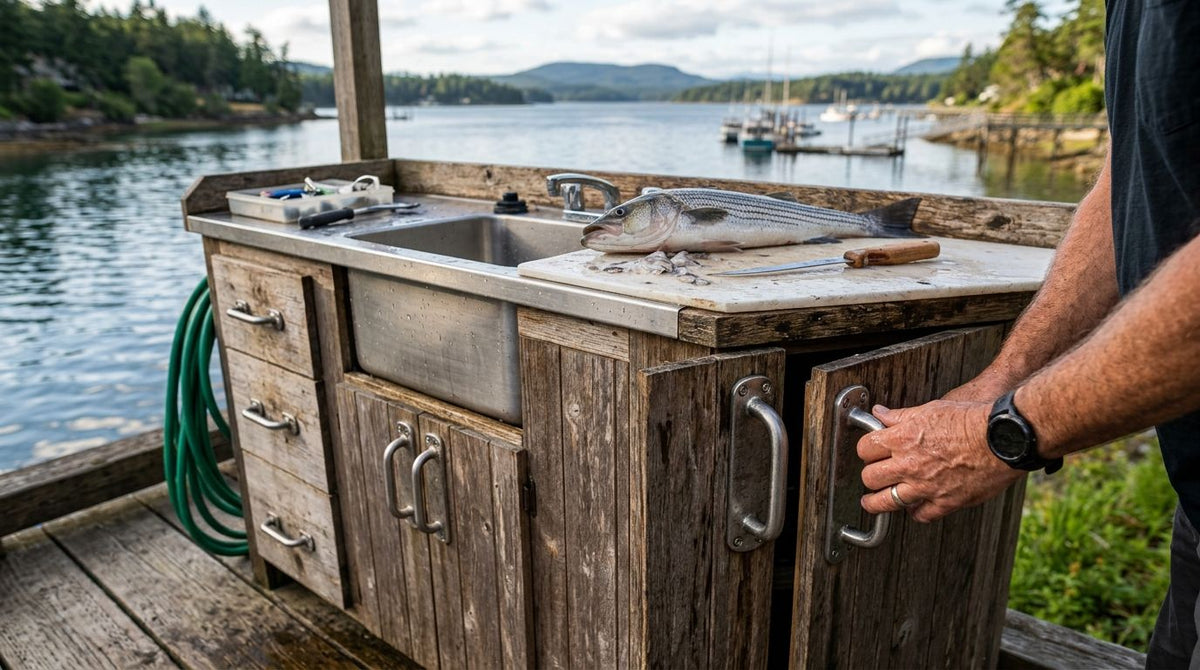
Cabinet pulls for outdoor fish cleaning stations need to survive fish blood, brine, hose spray, and UV without pitting — and only bare or brushed stainless steel pulls do that reliably. Chrome and nickel-plated pulls are built for dry kitchens, not dock cabinets, and they show rust bleed within one season of direct blood or saltwater contact.
- Cabinet pulls for a fish cleaning station should be bare or brushed stainless steel — decorative chrome and nickel plating corrodes within a season of blood and brine exposure.
- Knobs.co carries a stainless steel cabinet knob and stainless bent bar pulls cut from solid stainless, not plated zinc alloy.
- Pair stainless pulls with stainless screws; mixing metals causes galvanic corrosion and rust streaking down the door face.
- Bar pulls of 4 to 12 inches outperform knobs for gloved, wet hands handling knives and bait.
Why cabinet hardware matters for fish cleaning stations
Standard kitchen cabinet pulls are engineered for dry hands and mild cleaning agents indoors. A fish cleaning station cabinet gets hosed down after every session, splashed with blood and slime, and left outside through UV exposure and, depending on climate, freeze-thaw cycles. Decorative finishes — chrome plating over zinc, oil-rubbed bronze over brass — are plated for looks, not for saltwater. That plating is often only microns thick, and once it's scratched by a fillet knife or a cooler edge, the base metal underneath starts pitting fast.
Most people searching for cabinet pulls for a fish cleaning station in 2026 already have a station built and are replacing hardware after the first rust bloom shows up on factory-installed pulls, not starting from a blank cabinet. That changes the buying decision: it's not about matching a kitchen aesthetic, it's about picking hardware that won't need replacing again next season.
“If a pull traps blood and scale in its grooves, it's the wrong pull for a cleaning station, no matter how good the finish looks in the store photo.”
Identify your exposure level before picking a finish
Not every fish cleaning station sees the same abuse, and the right pull depends on how much direct water and blood contact the cabinet actually takes.
- Covered station under a roof with no direct spray: heavier-gauge nickel or stainless can survive with regular rinsing.
- Open-air station hosed down after every cleaning session: bare or brushed stainless steel only.
- Coastal or brackish water use: look for hardware specified as 316-grade stainless where possible — standard 304 decorative stainless still pits under prolonged salt contact, a distinction worth checking on the product spec before you order.
- Freeze-thaw climates: skip zinc-alloy (pot metal) bodies regardless of finish; the base metal cracks before the plating even fails.
Choose stainless steel over decorative plating
A finish name doesn't tell you what the pull is actually made of, and that's where most cleaning-station hardware fails early.
- Check the material spec, not the finish name — plenty of "brushed nickel" or "polished chrome" listings are zinc alloy underneath, plated for shine only.
- The stainless steel cabinet knob at Knobs.co is cut from solid stainless, a different material class than stainless-look plated hardware.
- Reserve oil-rubbed bronze, polished chrome, and nickel-plated pulls for covered stations with no direct spray — see the same logic applied to boat interiors in Knobs.co's guide to outdoor kitchen cabinet hardware.
- Avoid anything marketed as "stainless finish" without the word steel attached — finish and material are not the same claim.
Match fastener metal to pull metal
The pull isn't the only part exposed to water — the screws are too, and mismatched metal ruins a good pull fast.
- Use stainless steel screws with stainless pulls; carbon-steel screws paired with stainless hardware cause galvanic corrosion and rust streaking down the door face within a season.
- Confirm screw length matches your panel thickness plus post length — most stainless bar pulls ship with a screw pack sized for standard 3/4-inch cabinet stock, so custom panels need longer screws ordered separately.
- On fiberglass or marine-grade PVC panels, back the screw with a stainless washer so the pull doesn't pull through under repeated use.
Pick a pull profile that sheds scales and blood instead of trapping them
Profile matters as much as material for a surface that gets covered in slime and scale multiple times a week.
- Bar pulls with an open, rounded profile rinse clean in one pass under the hose.
- Ornate or beaded pulls trap scales and slime in the grooves, making full disinfection nearly impossible.
- Flat, untextured bar pulls are the easiest to wipe down between cleaning sessions.
- Knobs work fine on latches and lids but are harder to grip with wet, bloody gloves than a full bar pull.
Size the pull for gloved, wet hands
Grip size changes everything when your hands are slick with fish oil and wearing rubber gloves.
- Go 4 inches minimum center-to-center on any drawer or door handled during active cleaning — shorter pulls are hard to grab with slick gloves.
- On wide utility drawers holding knife rolls or bag dispensers, an 11 3/16-inch stainless bent bar pull spreads the load across more screws and gives a full-hand grip.
- Appliance-style pulls of 12 inches or more suit tall tackle cabinets or ice chest doors that need a two-hand pull.
Test hand-feel and finish before ordering for the whole station
A pull that reads well in a photo can feel wrong in a wet, gloved hand, so test before committing to every drawer front on the station.
- Manual/free way: hold a sample against your actual cabinet edge and check the reveal and grip clearance before ordering in bulk.
- Knobs.co ships free samples, which is the faster way to check finish and grip feel against a wet glove before buying pulls for every drawer on the station.
- Confirm the sample's material spec matches what ships with the full order — plated finishes sometimes vary by run.
Maintain the hardware on a schedule, not just when it looks bad
Even stainless benefits from a rinse-and-wipe routine, and skipping it shortens the life of every pull on the station.
- Rinse hardware with fresh water after every session, even if the cabinet itself gets hosed anyway — blood and brine sit in screw heads longer than on flat surfaces.
- Wipe stainless with a soft cloth monthly to prevent surface film buildup that dulls the brushed finish.
- Replace fasteners at the first sign of rust bleed — a rusting screw will stain a stainless pull's face even though the pull itself isn't corroding.
Comparison: pull options for an outdoor fish cleaning station
| Option | Best for | Key limitation |
|---|---|---|
| Stainless steel cabinet knob | Latch and lid hardware, low grip-force spots | Small grip surface for gloved, wet hands |
| 11 3/16-inch stainless bent bar pull | Wide utility and cutting-board drawers | No backplate option, must match existing hole spacing |
| Stainless bent bar pull, 7 9/16-inch | Narrow tackle or bait drawers | Shorter bar limits two-hand grip on heavy loads |
| Decorative bronze or nickel-plated bar pull | Covered stations with no direct spray | Plating pits within a season of direct blood or brine contact |
Buy stainless for anything the hose reaches. Skip decorative plated pulls entirely if the station sits in direct salt spray.
Common mistakes fish cleaning station builders make
- Installing leftover kitchen-remodel pulls — chrome-plated zinc alloy that rust-bleeds within one fishing season outdoors.
- Mixing steel screws with stainless pulls, which causes galvanic corrosion and rust streaking down the door face.
- Choosing ornate, textured pull profiles that trap scales and blood in the grooves, making disinfecting nearly impossible.
- Undersizing pull length, forcing a one-finger grip with wet, bloody gloves during a cleaning session.
- Skipping maintenance because the cabinet gets hosed anyway — screw heads and pull backs still hold moisture longer than flat panel surfaces.
FAQ
What's the best cabinet pull material for an outdoor fish cleaning station?
Bare or brushed stainless steel is the best material for an outdoor fish cleaning station in 2026. It resists blood, brine, and UV exposure far longer than chrome or nickel-plated zinc alloy.
Do stainless steel cabinet pulls rust outdoors?
Stainless steel resists rust far better than plated hardware, but it can still develop surface film or, in coastal areas, minor pitting over years without rinsing. Regular fresh-water rinses keep the finish clean.
Should I use knobs or pulls on a fish cleaning station cabinet?
Bar pulls work better than knobs for drawers and doors handled during active cleaning because they give a full-hand grip with wet, gloved hands. Knobs are fine for latches and lids that see less grip force.
Can I use standard kitchen cabinet pulls outdoors?
Standard decorative kitchen pulls are plated for indoor use and will corrode fast under direct blood, brine, and hose spray. Reserve them for covered stations with no direct water contact.
What grade of stainless steel resists saltwater best?
316-grade stainless resists chloride and saltwater corrosion better than 304-grade, which is the more common grade in decorative cabinet hardware. Check the product spec for grade before buying for coastal use.
How long do cabinet pulls last on a dock or fish cleaning station?
Stainless steel pulls with proper fasteners and regular rinsing can last many years outdoors; plated decorative pulls often show rust bleed within a single season of direct blood and brine contact.
Do I need stainless screws with stainless pulls?
Yes. Mixing carbon-steel screws with stainless pulls causes galvanic corrosion and rust streaking down the cabinet face, even though the pull itself stays intact.
One last thing
The finish name on a listing tells you almost nothing about corrosion resistance — the material spec does. A pull labeled brushed nickel or polished chrome can be built on a zinc-alloy body that will rust through in a single 2026 fishing season at a station that gets hosed down daily, while a plain, unglamorous stainless bar pull with no special coating outlasts it by years. Read the material line before the finish name, every time.