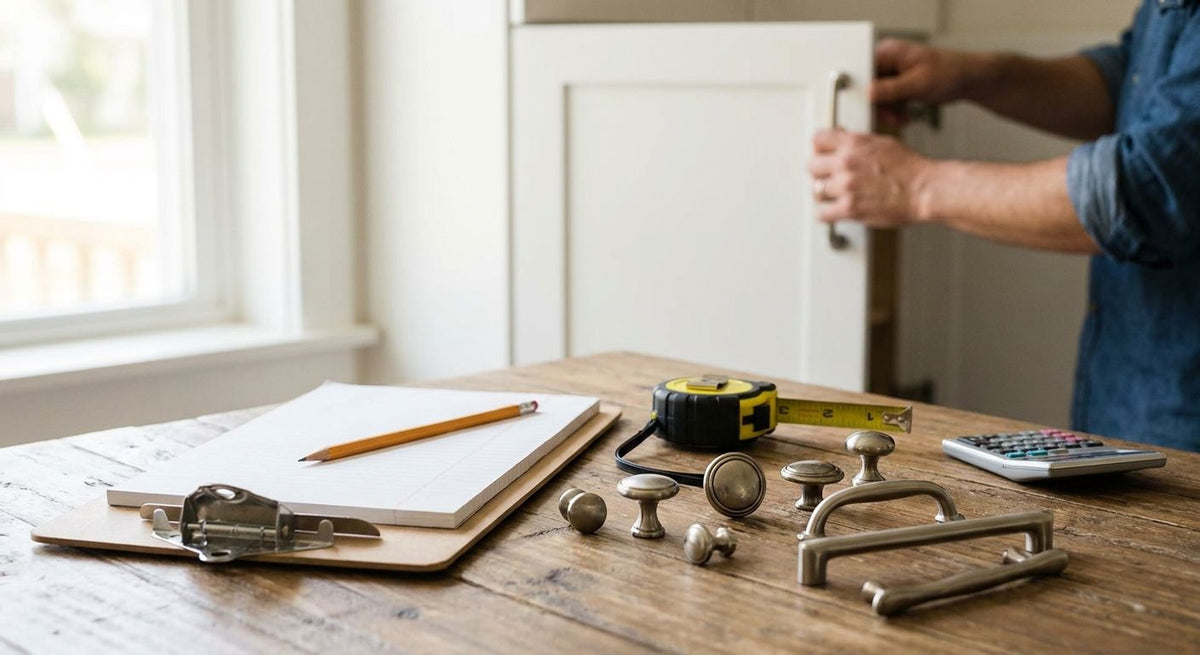
Calculate cabinet hardware quantity by counting one knob or pull for every cabinet door and drawer front in the remodel, then adding a 5-10% buffer for spares, mismeasured holes, and future replacements. A 30-door, 20-drawer kitchen needs about 56 base pieces before that buffer — plan to order 59-62 total pieces. Bathroom vanities run much smaller: a two-door, two-drawer vanity needs just 4 pieces. The number that trips people up isn't the knob-and-pull count — it's the latches, hinges, and appliance pulls that sit outside that total but still need their own line on the order.
- Calculate cabinet hardware quantity by counting 1 knob or pull per door and drawer front, then add a 5-10% buffer.
- A 30-door, 20-drawer kitchen needs about 56 base pieces — order 59-62 total for 2026 installs.
- Drawers 24 inches wide or wider commonly take 2 pulls set side by side, not 1.
- Appliance pulls, hinges, and latches count separately from the knob-and-pull total.
- Knobs.co stocks 50,000+ SKUs, so matching finish across a full remodel count is doable in one order.
Why this matters
Ordering short is the most common mistake in a 2026 cabinet remodel. A missed drawer count means a second order, a shipping wait, and a real risk that the finish batch has shifted between orders — bronze and brass runs vary lot to lot. Get the count right once and the whole project moves in one pass, not two.
Before you finalize the count, confirm the exact hole spacing on your existing drawers and doors, especially in older homes where centers rarely match modern hardware. Knobs.co's guide on pull hole spacing walks through the two measurements that determine whether your new pulls drop into the old holes or need fresh drilling.
How do you calculate cabinet hardware quantity for a remodel?
Work through five steps in order. Skipping the buffer step is the single most common reason people reorder mid-install.
- Count every cabinet door. Each door gets 1 knob or 1 pull, regardless of size.
- Count every drawer front. Drawers under 24 inches wide take 1 pull. Drawers 24 inches or wider — pot drawers, island drawers, wide pantry drawers — commonly take 2 pulls set side by side for balance and grip.
- Add appliance pulls separately. One pull per panel-ready dishwasher, fridge panel, or trash pullout front.
- Add hinges only if you're replacing them. Standard overlay doors take 2 hinges; tall or heavy doors over 40 inches often need 3.
- Total the base count, then add a 5-10% buffer for spares, a dropped screw stripping a hole, or a future replacement two years down the line.
| Cabinet element | Count rule | Example (30 doors, 20 drawers) |
|---|---|---|
| Standard door | 1 knob or pull | 30 |
| Drawer under 24" | 1 pull | 16 |
| Drawer 24"+ wide | 2 pulls | 4 drawers x 2 = 8 |
| Appliance panel | 1 pull each | 2 (dishwasher + fridge) |
| Base total | — | 56 pieces |
| With 5-10% buffer | — | 59-62 pieces |
Kitchen cabinets: count every door and drawer front separately
Kitchens have the most doors and drawers of any room in a remodel, and they're where miscounts happen most. Upper cabinets and lower cabinets get treated the same way in the count — 1 piece per door — but drawer banks near the sink or range often run wider than 24 inches, which is where the double-pull rule kicks in and people forget to double their number.
Size matters as much as count. A pull that's too short for a wide drawer front looks off-center even when it's centered — Knobs.co's guide on cabinet knob size covers how door width should drive your size choice, not just your finish choice. Get the size decision locked before you finalize the order so you're not recounting later.
Bathroom vanities and built-ins need far fewer pieces
A typical bathroom vanity has 1-3 doors and 2-4 drawers, which puts most vanity counts in the 4-7 piece range before any buffer. Double vanities with two sink cabinets roughly double that number, but the counting rule doesn't change — 1 piece per door, 1-2 per drawer depending on width.
Built-ins like linen cabinets, medicine cabinets, and under-stair storage follow the same logic. The formula never changes across room types — only the door and drawer count does.
Appliance pulls and specialty hardware count separately from the base total
Appliance pulls, cabinet latches, and childproof catches live outside the knob-and-pull count but still need their own line item on the order. A panel-ready dishwasher or fridge takes one appliance pull each, and cabinets near a kitchen with young kids or pets often add a latch per door — a cost most remodel budgets forget until the punch-list walkthrough.
Latches are also where finish-matching gets missed most, since people count knobs and pulls carefully and then grab whatever latch is on the shelf.


Why cabinet hardware quantity varies project to project
- Drawer-to-door ratio — kitchens heavy on wide island drawers need more double-pull counts than a kitchen built mostly with doors.
- Cabinet style — inset doors sometimes carry an extra hinge per door versus overlay doors, which shifts the hinge total even when the pull total stays flat.
- Trade vs. DIY buyers — contractors and designers ordering for multiple units often round the buffer up past 10% to cover callback replacements across a whole project.
- Appliance count — a kitchen with a panel-ready fridge, dishwasher, and trash pullout adds three appliance pulls that a plain kitchen wouldn't need.
- Backplate use — adding backplates behind knobs doubles the SKU count per piece, even though the knob count itself doesn't change.
- Finish availability — ordering across two batches to hit a quantity increases the odds of a visible finish mismatch, which is its own reason to nail the count on the first order.
“If you're short two pulls on install day, the count was wrong on day one, not the shipment.”
How many pulls do you need for a kitchen island?
A kitchen island needs 1 pull per door and drawer, same as the rest of the kitchen — the only twist is that island drawers run wider more often, so check every island drawer against the 24-inch double-pull threshold before finalizing the count.
Do you need extra cabinet hardware for spares?
Yes — a 5-10% buffer on top of the base count covers stripped screw holes, a dropped piece during install, and a replacement two or three years after the remodel when the exact finish may no longer be in the same production run.
How many hinges do you need per cabinet door?
Standard overlay cabinet doors need 2 hinges each, while doors over 40 inches tall or unusually heavy solid-wood doors commonly need 3 hinges to prevent sagging over time.
FAQ
How much extra cabinet hardware should I order for a remodel?
Order a 5-10% buffer above your base door-and-drawer count. That buffer covers a stripped hole during install and gives you matching spares if a piece needs replacing years later.
How many knobs do I need for a 30-door kitchen?
A 30-door kitchen needs 30 knobs or pulls at minimum, one per door, before you add drawer counts and any appliance pulls separately.
Do drawer pulls come in one style for the whole kitchen?
Most remodels use one pull style and finish across all drawers for a consistent look, though designers sometimes mix a bar pull on drawers with a knob on doors.
How many hinges do I need per cabinet door?
Standard overlay doors need 2 hinges each. Tall doors over 40 inches or heavy solid-wood doors often need 3 to keep the door from sagging.
What's the difference between a knob count and a pull count?
Knobs and pulls are counted the same way — 1 per door, 1-2 per drawer depending on width — the difference is only which style you choose per opening, not how you count them.
How many pulls does a kitchen island need?
A kitchen island needs 1 pull per door and drawer front, with 2 pulls on any island drawer 24 inches wide or wider.
Is it cheaper to order hardware in bulk for a remodel?
Ordering the full quantity in one batch avoids a second shipment and reduces the risk of a finish mismatch between production runs, which matters more than any per-piece savings.
How do I match cabinet hardware finish across a large order?
Order one sample of your chosen finish before locking the full quantity so you can confirm the color under your actual kitchen lighting before 50-plus pieces ship.
One last thing
The count almost everyone gets wrong isn't the door count — it's the appliance pulls, because they're specified by the appliance panel supplier, not the cabinet maker, and fall through the cracks between two trades. Confirm appliance pull count with whoever is installing the panels before you finalize the order. Order a sample of your finish from Knobs.co before committing to the full quantity — a 50-plus piece order is expensive to redo over a color that reads differently once it's on 56 doors instead of one sample chip.